Buy loan-online.eu ?
We are moving the project
loan-online.eu .
Are you interested in purchasing the domain
loan-online.eu ?
domain@kv-gmbh.de · 0541-91531010
Buy loan-online.eu ?
What is an example of a non-deterministic but deterministic algorithm?
An example of a non-deterministic but deterministic algorithm is the Monte Carlo algorithm. In this algorithm, random choices are made during the computation, but the final result is deterministic and always the same for a given input. The randomness is used to simplify the algorithm or make it more efficient, but the outcome is predictable and consistent. **
What is the difference between non-deterministic and deterministic finite automata?
The main difference between non-deterministic finite automata (NFA) and deterministic finite automata (DFA) lies in their transition function. In an NFA, there can be multiple transitions from a single state on the same input symbol, while in a DFA, there can only be one transition from a state on a particular input symbol. This means that NFAs can have multiple possible paths for a given input string, while DFAs have only one unique path for any input string. As a result, NFAs are generally more flexible and expressive, but DFAs are easier to analyze and implement. **

Similar search terms for Non-deterministic
Top-Angebote
Products related to Non-deterministic:
-
Perfect Picks Market Toy Cash Register For Kids, Checkout Scanner, Play Money Food Set, , Credit Card Machine, Fruit Card Reader Toy Cash Register For Kids, Checkout Scanner, Play Money Food Set, , Credit Card Machine, Fruit Card ReaderEngage Your Child with Playful Learning The 33PCS Toy Cash Register for Kids with Checkout Scanner is a perfect way to help children develop essential skills while having fun! Designed for little ones, this interactive toy includes a realistic...59,97 $*Shipping: 0,00 $Secure redirect to the provider
-
Design House Matte Black Traditional Tulip Dummy Door Knob, Non-Locking Closet and French Door Application, 2-PackThe Terrace Dummy Door Knob 2-Pack is ideal for paired door applications including French doors and double closets that do not require a latch or lock. Each knob mounts flush to the door surface and provides a decorative, finished look.26,55 $*Shipping: 0,00 $Secure redirect to the provider
-
Design House Matte Black Traditional Tulip Dummy Door Knob, Non-Locking Closet and French Door Application, 6-PackThe Terrace Dummy Door Knob 6-Pack is ideal for whole-home updates or multi-room projects including French doors and double closets that do not require a latch or lock. Each knob mounts flush to the door surface and provides a decorative, finished...58,51 $*Shipping: 0,00 $Secure redirect to the provider
-
The Psychology Of Money, The Art of Spending Money & Same as Ever by Morgan Housel 3 Books Collection Set - Non Fiction - Paperback Pan MacmillanTitles in this set: 1. Same as Ever 2. The Psychology of Money 3. The Art of Spending Money Description: Same as Ever When planning for the future we often ask, “What will the economy be doing this time next year?” Or, “What will be different ten years from now?” But forecasting is hard. The important events that will shape the future are inherently unpredictable. Instead, we should be asking a different question: What will be the same ten years from now? What will be the same one hundred years from now? Knowledge of the things that never change is more useful, and more important, than an uncertain prediction of an unknowable future. In Same As Ever, bestselling author Morgan Housel shares 24 short stories about the ways that life, behaviour, and business will always be the same. Armed with this knowledge of the unchanging, you will have a powerful new ability to think about risk, opportunity, and how to navigate the uncertainty of the future. The Psychology of Money Doing well with money isn't necessarily about what you know. It's about how you behave. And behavior is hard to teach, even to really smart people. Money investing, personal finance, and business decisions is typically taught as a math-based field, where data and formulas tell us exactly what to do. But in the real world people don't make financial decisions on a spreadsheet. They make them at the dinner table, or in a meeting room, where personal history, your own unique view of the world, ego, pride, marketing, and odd incentives are scrambled together. In The Psychology of Money, award-winning author Morgan Housel shares 19 short stories exploring the strange ways people think about money and teaches you how to make better sense of one of life's most important topics. The Art of Spending Money Can money buy happiness? Yes. Can spending it make you happier? Absolutely. Yet, many of us struggle to unlock its full potential – either by spending on things that don't bring as much joy as they should, or by avoiding investments that would truly enhance our mental well-being. In The Art of Spending Money, award-winning and global bestselling author Morgan Housel offers a refreshingly practical approach to managing wealth while finding deeper meaning and contentment. Instead of cookie-cutter financial advice, Housel provides you with psychological tools to navigate your personal relationship with money and optimise for happiness. Discover why people often mistake envy for admiration, how to align your expectations with your income, and ways to invest in future happiness while avoiding regret. Learn about the dangers of social debt and embrace the radical idea that the fastest way to build wealth is by going slow. The Art of Spending Money delves into the complexities that surround money – envy, social aspirations, identity, and insecurity – crucial aspects often missed in traditional financial books. Armed with new insights into money and wealth, you’ll learn to sidestep common spending...26,99 £*Shipping: 2,99 £Secure redirect to the provider




-
How do non-deterministic finite automata work?
Non-deterministic finite automata (NFA) work by allowing multiple possible transitions from a given state on a given input symbol. This means that at any given point, the NFA can be in multiple states simultaneously. When a string is inputted, the NFA explores all possible paths that can be taken based on the input symbols. If any of these paths lead to an accepting state, the NFA accepts the input string. NFAs are more expressive than deterministic finite automata (DFA) as they can handle certain types of languages that DFAs cannot. **
-
How do you create a deterministic finite automaton from a non-deterministic pushdown automaton?
To create a deterministic finite automaton (DFA) from a non-deterministic pushdown automaton (PDA), we can use the subset construction method. This involves creating a state in the DFA for each possible combination of states in the PDA. The transitions in the DFA are determined by simulating the behavior of the PDA on each input symbol. If the PDA can be in multiple states at a given time, the DFA will have a state for each combination of those states. The final states of the DFA are determined by whether any of the PDA's possible states are final states. This process results in a deterministic finite automaton that simulates the behavior of the original non-deterministic pushdown automaton. **
-
How does a non-deterministic finite automaton work?
A non-deterministic finite automaton (NFA) is a theoretical model of computation that consists of a set of states, a set of input symbols, a transition function, an initial state, and a set of accepting states. Unlike a deterministic finite automaton (DFA), an NFA can have multiple possible transitions from a given state on a given input symbol. When processing input, an NFA can be in multiple states simultaneously and can transition to multiple states at once. It accepts a given input string if there exists at least one path through the states that leads to an accepting state. NFAs are often used in theoretical computer science to model certain types of computations and are a key concept in the theory of formal languages and automata. **
-
Is the universe deterministic?
The question of whether the universe is deterministic is a complex and debated topic in physics and philosophy. Determinism is the idea that every event or state of affairs, including every human decision and action, is the inevitable and necessary consequence of preceding events. In the context of quantum mechanics, there is debate about whether the universe is truly deterministic or if there is inherent randomness at the fundamental level. Some interpretations of quantum mechanics suggest that there is inherent indeterminacy at the quantum level, while others argue that there may be hidden variables that could potentially restore determinism. Overall, the question of whether the universe is deterministic remains an open and ongoing area of inquiry in science and philosophy. **
Can religious beliefs be deterministic?
Religious beliefs can sometimes be deterministic in the sense that they provide a framework for understanding the world and one's place in it. Some religions teach that certain events are predestined or guided by a higher power, which can influence individuals to believe that their lives are predetermined. However, not all religious beliefs are deterministic, as some emphasize free will and personal choice. Ultimately, the extent to which religious beliefs are deterministic varies depending on the specific teachings and interpretations of each religion. **
Can religious dissection be deterministic?
Religious dissection can be deterministic in the sense that certain religious beliefs or doctrines may dictate specific actions or beliefs that followers must adhere to. These beliefs can shape an individual's worldview and guide their decisions and behaviors in a predetermined manner. However, it is important to note that not all religious beliefs are deterministic, as some religions also emphasize free will and personal choice. Ultimately, the extent to which religious dissection is deterministic depends on the specific teachings and interpretations within a particular religious tradition. **
Top-Angebote
Products related to Non-deterministic:
-
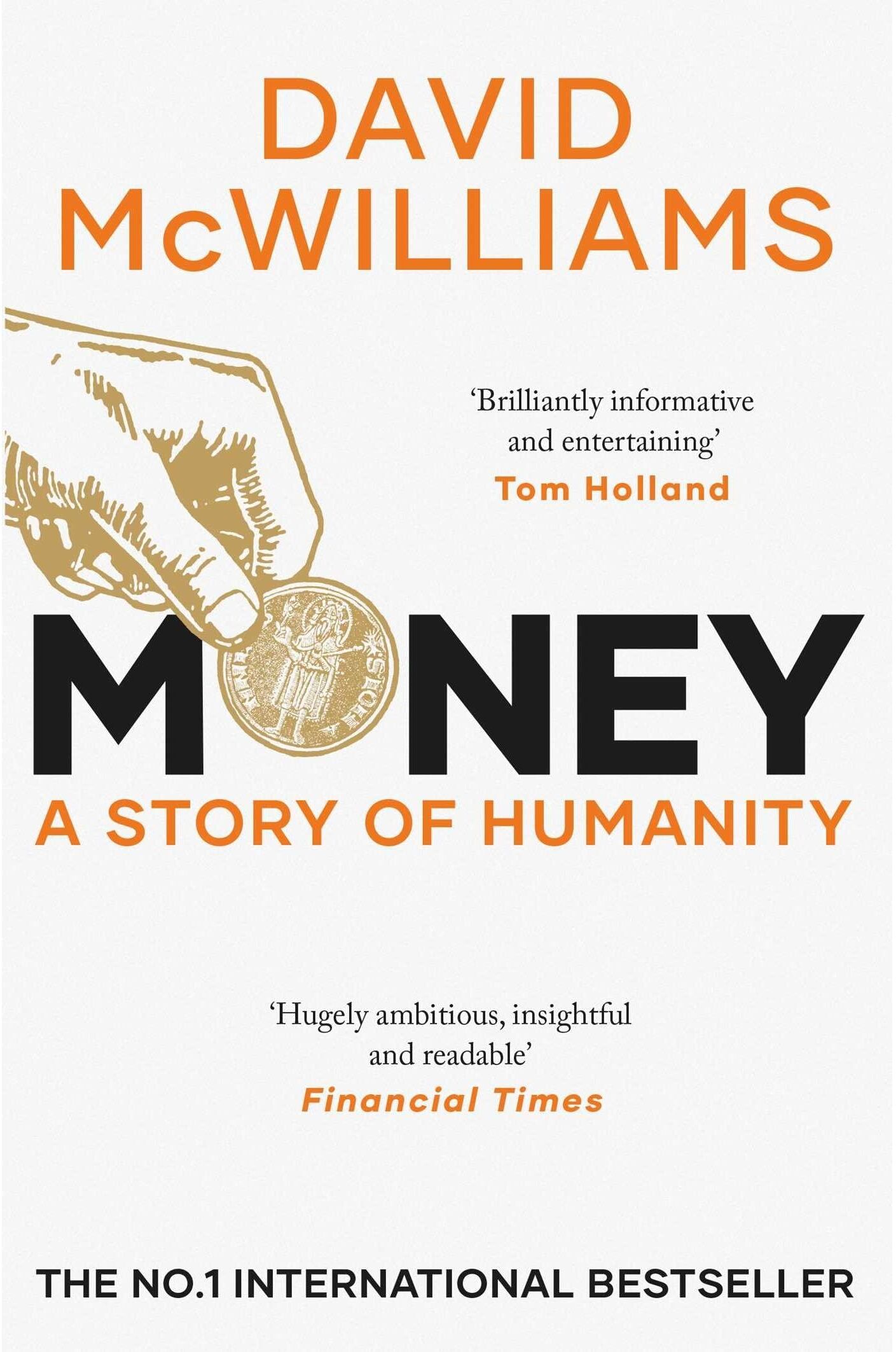
Simon & Schuster Money: A Story of Humanity by David McWilliams Economic History & Global Finance ExplainedIn Money: A Story of Humanity, renowned economist David McWilliams explores the fascinating history of money — not just as currency, but as a powerful force that has shaped human civilisation, relationships, technology, and global society. From ancient barter systems to cryptocurrency revolutions, McWilliams reveals how money reflects our values, ambitions, fears, politics, and culture.Rich with storytelling, sharp insights, and humour, this book makes complex economic ideas accessible, engaging, and deeply human. Perfect for readers who enjoy exploring how history, psychology, markets, and power intersect, Money: A Story of Humanity provides a fresh, eye-opening look at how money drives — and is driven by — human behaviour. Ideal for fans of Yuval Noah Harari, Tim Harford, Niall Ferguson, and Mary Beard.7,99 £*Shipping: 2,99 £Secure redirect to the provider
-
Multicon Wholesale Hub Long Handle Lotion Applicator, Back Lotion Brush For Tanning, Skin Cream, Easy Application, Non Slip Handle Long Handle Lotion Applicator, Back Lotion Brush For Tanning, Skin Cream, Easy Application, Non Slip Handle"Effortlessly Apply Lotion and Creams with the 17""in approx Long Handle Lotion Applicator Achieve smooth, even coverage with ease using the 17""in approx Long Handle Lotion Applicator, designed for effortless application of tanning products, lotions,..."54,97 $*Shipping: 0,00 $Secure redirect to the provider
-
Perfect Picks Market Toy Cash Register For Kids, Checkout Scanner, Play Money Food Set, , Credit Card Machine, Fruit Card Reader Toy Cash Register For Kids, Checkout Scanner, Play Money Food Set, , Credit Card Machine, Fruit Card ReaderEngage Your Child with Playful Learning The 33PCS Toy Cash Register for Kids with Checkout Scanner is a perfect way to help children develop essential skills while having fun! Designed for little ones, this interactive toy includes a realistic...59,97 $*Shipping: 0,00 $Secure redirect to the provider
-
Design House Matte Black Traditional Tulip Dummy Door Knob, Non-Locking Closet and French Door Application, 2-PackThe Terrace Dummy Door Knob 2-Pack is ideal for paired door applications including French doors and double closets that do not require a latch or lock. Each knob mounts flush to the door surface and provides a decorative, finished look.26,55 $*Shipping: 0,00 $Secure redirect to the provider
-
What is an example of a non-deterministic but deterministic algorithm?
An example of a non-deterministic but deterministic algorithm is the Monte Carlo algorithm. In this algorithm, random choices are made during the computation, but the final result is deterministic and always the same for a given input. The randomness is used to simplify the algorithm or make it more efficient, but the outcome is predictable and consistent. **
-
What is the difference between non-deterministic and deterministic finite automata?
The main difference between non-deterministic finite automata (NFA) and deterministic finite automata (DFA) lies in their transition function. In an NFA, there can be multiple transitions from a single state on the same input symbol, while in a DFA, there can only be one transition from a state on a particular input symbol. This means that NFAs can have multiple possible paths for a given input string, while DFAs have only one unique path for any input string. As a result, NFAs are generally more flexible and expressive, but DFAs are easier to analyze and implement. **
-
How do non-deterministic finite automata work?
Non-deterministic finite automata (NFA) work by allowing multiple possible transitions from a given state on a given input symbol. This means that at any given point, the NFA can be in multiple states simultaneously. When a string is inputted, the NFA explores all possible paths that can be taken based on the input symbols. If any of these paths lead to an accepting state, the NFA accepts the input string. NFAs are more expressive than deterministic finite automata (DFA) as they can handle certain types of languages that DFAs cannot. **
-
How do you create a deterministic finite automaton from a non-deterministic pushdown automaton?
To create a deterministic finite automaton (DFA) from a non-deterministic pushdown automaton (PDA), we can use the subset construction method. This involves creating a state in the DFA for each possible combination of states in the PDA. The transitions in the DFA are determined by simulating the behavior of the PDA on each input symbol. If the PDA can be in multiple states at a given time, the DFA will have a state for each combination of those states. The final states of the DFA are determined by whether any of the PDA's possible states are final states. This process results in a deterministic finite automaton that simulates the behavior of the original non-deterministic pushdown automaton. **
Similar search terms for Non-deterministic
-
Design House Matte Black Traditional Tulip Dummy Door Knob, Non-Locking Closet and French Door Application, 6-PackThe Terrace Dummy Door Knob 6-Pack is ideal for whole-home updates or multi-room projects including French doors and double closets that do not require a latch or lock. Each knob mounts flush to the door surface and provides a decorative, finished...58,51 $*Shipping: 0,00 $Secure redirect to the provider
-
The Psychology Of Money, The Art of Spending Money & Same as Ever by Morgan Housel 3 Books Collection Set - Non Fiction - Paperback Pan MacmillanTitles in this set: 1. Same as Ever 2. The Psychology of Money 3. The Art of Spending Money Description: Same as Ever When planning for the future we often ask, “What will the economy be doing this time next year?” Or, “What will be different ten years from now?” But forecasting is hard. The important events that will shape the future are inherently unpredictable. Instead, we should be asking a different question: What will be the same ten years from now? What will be the same one hundred years from now? Knowledge of the things that never change is more useful, and more important, than an uncertain prediction of an unknowable future. In Same As Ever, bestselling author Morgan Housel shares 24 short stories about the ways that life, behaviour, and business will always be the same. Armed with this knowledge of the unchanging, you will have a powerful new ability to think about risk, opportunity, and how to navigate the uncertainty of the future. The Psychology of Money Doing well with money isn't necessarily about what you know. It's about how you behave. And behavior is hard to teach, even to really smart people. Money investing, personal finance, and business decisions is typically taught as a math-based field, where data and formulas tell us exactly what to do. But in the real world people don't make financial decisions on a spreadsheet. They make them at the dinner table, or in a meeting room, where personal history, your own unique view of the world, ego, pride, marketing, and odd incentives are scrambled together. In The Psychology of Money, award-winning author Morgan Housel shares 19 short stories exploring the strange ways people think about money and teaches you how to make better sense of one of life's most important topics. The Art of Spending Money Can money buy happiness? Yes. Can spending it make you happier? Absolutely. Yet, many of us struggle to unlock its full potential – either by spending on things that don't bring as much joy as they should, or by avoiding investments that would truly enhance our mental well-being. In The Art of Spending Money, award-winning and global bestselling author Morgan Housel offers a refreshingly practical approach to managing wealth while finding deeper meaning and contentment. Instead of cookie-cutter financial advice, Housel provides you with psychological tools to navigate your personal relationship with money and optimise for happiness. Discover why people often mistake envy for admiration, how to align your expectations with your income, and ways to invest in future happiness while avoiding regret. Learn about the dangers of social debt and embrace the radical idea that the fastest way to build wealth is by going slow. The Art of Spending Money delves into the complexities that surround money – envy, social aspirations, identity, and insecurity – crucial aspects often missed in traditional financial books. Armed with new insights into money and wealth, you’ll learn to sidestep common spending...26,99 £*Shipping: 2,99 £Secure redirect to the provider
-
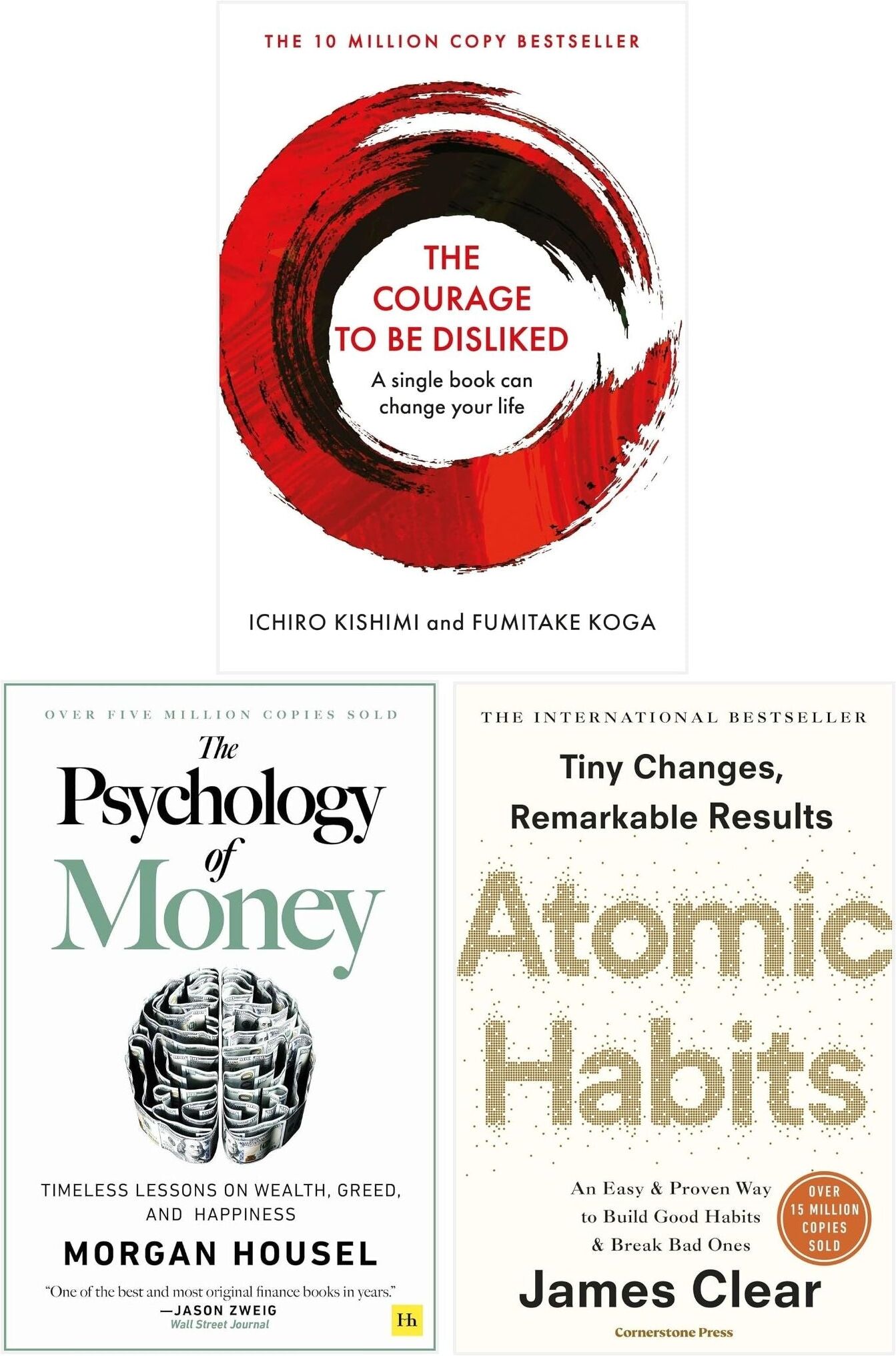
Harriman House The Psychology of Money, Atomic Habits & The Courage to Be Disliked – 3 Book Collection Set Bestselling Self-Development, Personal Finance, Self-HelUpgrade your mindset, habits, and financial thinking with this powerful 3-book collection set, featuring three of the most influential modern self-development titles. This essential bundle includes: The Psychology of Money by Morgan Housel – Discover how emotions and behaviour shape financial decisions and long-term wealth. Atomic Habits by James Clear – Learn how small habits can create powerful, lasting change. The Courage to Be Disliked by Ichiro Kishimi & Fumitake Koga** – Explore a transformative approach to happiness, freedom, and self-acceptance based on Adlerian psychology. Together, these books offer a complete guide to financial wisdom, personal growth, emotional resilience, and habit-building, making this set ideal for anyone looking to improve their life and mindset. Why Readers Love This Collection: Includes 3 bestselling modern self-development books Covers money, habits, mindset, and personal freedom Practical, easy-to-apply life lessons Perfect for beginners and experienced readers alike Ideal gift for motivation and self-improvement A must-have for anyone on a journey of personal growth, this collection delivers powerful insights for building a better, more successful life.22,99 £*Shipping: 2,99 £Secure redirect to the provider
-
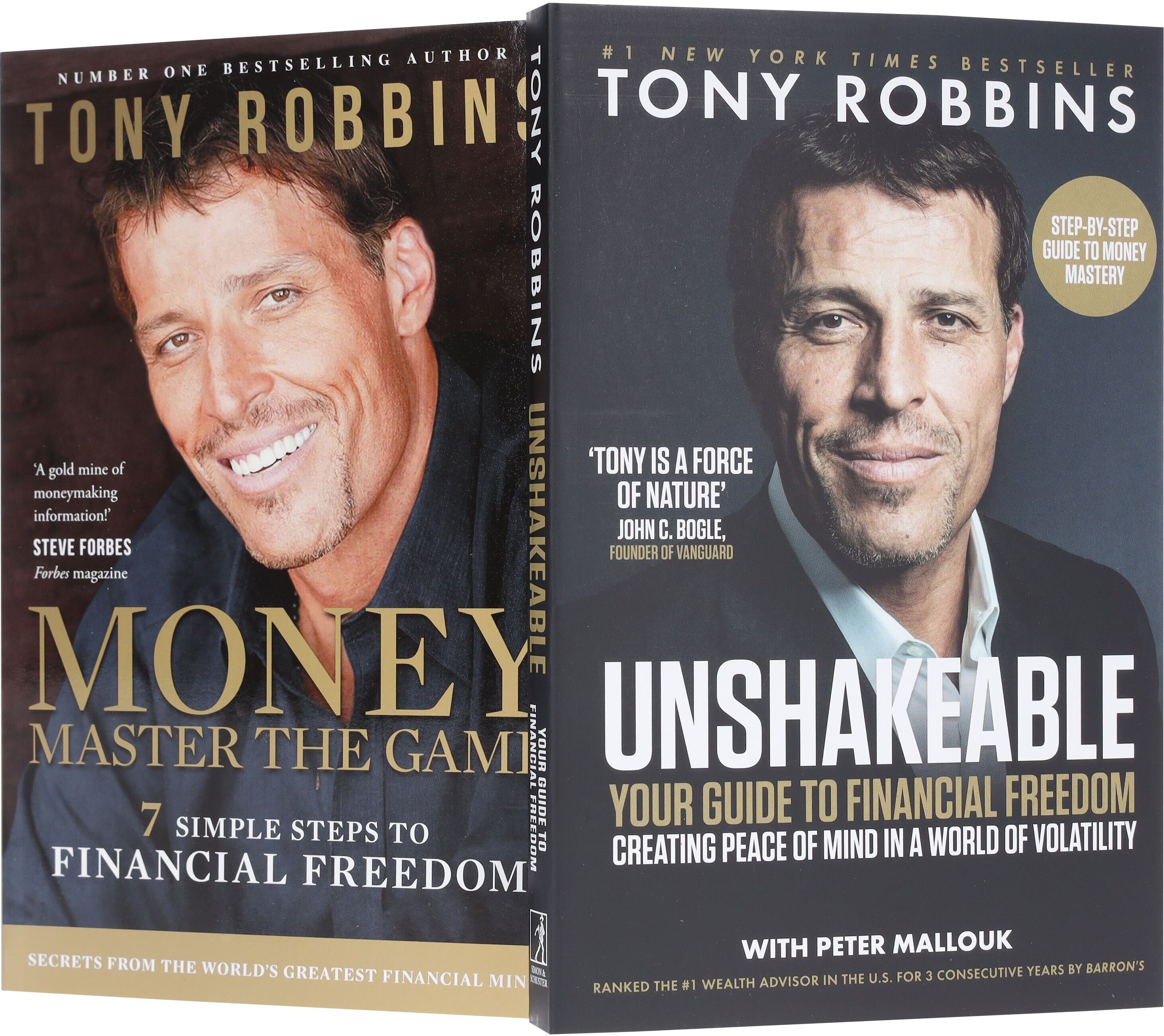
Tony Robbins Collection (Unshakeable: Your Guide to Financial Freedom & Money Master the Game) 2 Books Set - Non Fiction - Paperback Simon & SchusterTitles in this Set: 1. Unshakeable: Your Guide to Financial Freedom 2. Money Master the Game Description: Unshakeable: Your Guide to Financial Freedom Tony Robbins, arguably the most recognizable life and business strategist and guru, is back with a timely, unique follow-up to his smash New York Times bestseller Money: Master the Game. Market corrections are as constant as seasons are in nature. There have been 30 such corrections in the past 30 years, yet there’s never been an action plan for how not only to survive, but thrive through each change in the stock market. Building upon the principles in Money: Master the Game, Robbins offers the reader specific steps they can implement to protect their investments while maximizing their wealth. It’s a detailed guide designed for investors, articulated in the common-sense, practical manner that the millions of loyal Robbins fans and students have come to expect and rely upon. Few have navigated the turbulence of the stock market as adeptly and successfully as Tony Robbins. His proven, consistent success over decades makes him singularly qualified to help investors (both seasoned and first-timers alike) preserve and add to their investments. Money Master the Game Tony Robbins has created a 7-step blueprint for securing financial freedom. Based on extensive research and one-on-one interviews with more than 50 of the most legendary financial experts in the world - from Carl Icahn, to Warren Buffett, to Jack Bogle and Steve Forbes. Robbins has a brilliant way of using metaphor and story to illustrate even the most complex financial concepts - making them simple and actionable. With expert advice on our most important financial decisions, Robbins dispels the myths that often rob people of their financial dreams. Money: Master the Game contains expert advice for readers of every income level, providing guidance through the steps to become financially free by creating a lifetime income plan. This book delivers invaluable information and essential practices for getting your financial house in order. It's the book millions of people have been waiting for.12,99 £*Shipping: 2,99 £Secure redirect to the provider
-
How does a non-deterministic finite automaton work?
A non-deterministic finite automaton (NFA) is a theoretical model of computation that consists of a set of states, a set of input symbols, a transition function, an initial state, and a set of accepting states. Unlike a deterministic finite automaton (DFA), an NFA can have multiple possible transitions from a given state on a given input symbol. When processing input, an NFA can be in multiple states simultaneously and can transition to multiple states at once. It accepts a given input string if there exists at least one path through the states that leads to an accepting state. NFAs are often used in theoretical computer science to model certain types of computations and are a key concept in the theory of formal languages and automata. **
-
Is the universe deterministic?
The question of whether the universe is deterministic is a complex and debated topic in physics and philosophy. Determinism is the idea that every event or state of affairs, including every human decision and action, is the inevitable and necessary consequence of preceding events. In the context of quantum mechanics, there is debate about whether the universe is truly deterministic or if there is inherent randomness at the fundamental level. Some interpretations of quantum mechanics suggest that there is inherent indeterminacy at the quantum level, while others argue that there may be hidden variables that could potentially restore determinism. Overall, the question of whether the universe is deterministic remains an open and ongoing area of inquiry in science and philosophy. **
-
Can religious beliefs be deterministic?
Religious beliefs can sometimes be deterministic in the sense that they provide a framework for understanding the world and one's place in it. Some religions teach that certain events are predestined or guided by a higher power, which can influence individuals to believe that their lives are predetermined. However, not all religious beliefs are deterministic, as some emphasize free will and personal choice. Ultimately, the extent to which religious beliefs are deterministic varies depending on the specific teachings and interpretations of each religion. **
-
Can religious dissection be deterministic?
Religious dissection can be deterministic in the sense that certain religious beliefs or doctrines may dictate specific actions or beliefs that followers must adhere to. These beliefs can shape an individual's worldview and guide their decisions and behaviors in a predetermined manner. However, it is important to note that not all religious beliefs are deterministic, as some religions also emphasize free will and personal choice. Ultimately, the extent to which religious dissection is deterministic depends on the specific teachings and interpretations within a particular religious tradition. **
* All prices are inclusive of VAT and, if applicable, plus shipping costs. The offer information is based on the details provided by the respective shop and is updated through automated processes. Real-time updates do not occur, so deviations can occur in individual cases. ** Note: Parts of this content were created by AI.