Buy loan-online.eu ?
We are moving the project
loan-online.eu .
Are you interested in purchasing the domain
loan-online.eu ?
domain@kv-gmbh.de · 0541-91531010
Buy loan-online.eu ?
Should I borrow money or take out a loan?
Borrowing money and taking out a loan are essentially the same thing, as both involve receiving funds that need to be repaid with interest. Whether you should borrow money or take out a loan depends on your specific financial situation and needs. If you need a large sum of money for a specific purpose, such as buying a house or car, then taking out a loan from a bank or financial institution may be the best option. However, if you only need a small amount of money for a short period of time, borrowing from a friend or family member may be a better choice to avoid high interest rates and fees. It's important to carefully consider your options and assess your ability to repay the borrowed funds before making a decision. **
How long can Otto borrow money without interest?
Otto can borrow money without interest for up to 30 days. After 30 days, he will start incurring interest on the borrowed amount. It's important for Otto to repay the borrowed money within this interest-free period to avoid any additional costs. **

Similar search terms for 3
Top-Angebote
Products related to 3:
-
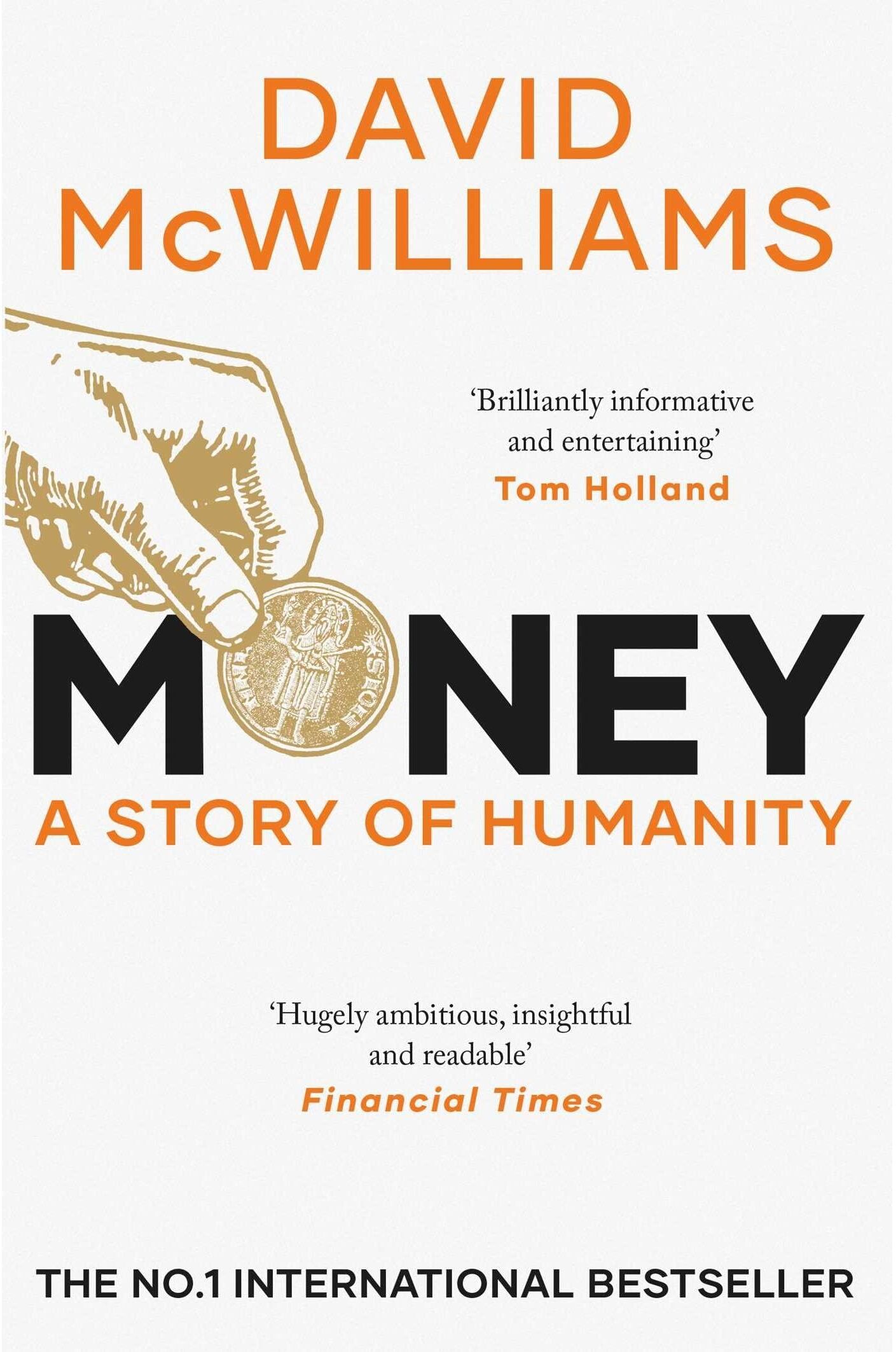
Simon & Schuster Money: A Story of Humanity by David McWilliams Economic History & Global Finance ExplainedIn Money: A Story of Humanity, renowned economist David McWilliams explores the fascinating history of money — not just as currency, but as a powerful force that has shaped human civilisation, relationships, technology, and global society. From ancient barter systems to cryptocurrency revolutions, McWilliams reveals how money reflects our values, ambitions, fears, politics, and culture.Rich with storytelling, sharp insights, and humour, this book makes complex economic ideas accessible, engaging, and deeply human. Perfect for readers who enjoy exploring how history, psychology, markets, and power intersect, Money: A Story of Humanity provides a fresh, eye-opening look at how money drives — and is driven by — human behaviour. Ideal for fans of Yuval Noah Harari, Tim Harford, Niall Ferguson, and Mary Beard.7,99 £*Shipping: 2,99 £Secure redirect to the provider
-
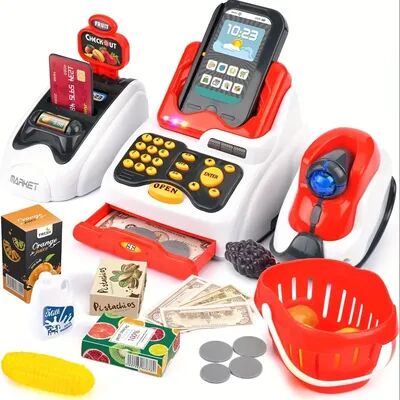
Perfect Picks Market Toy Cash Register For Kids, Checkout Scanner, Play Money Food Set, , Credit Card Machine, Fruit Card Reader Toy Cash Register For Kids, Checkout Scanner, Play Money Food Set, , Credit Card Machine, Fruit Card ReaderEngage Your Child with Playful Learning The 33PCS Toy Cash Register for Kids with Checkout Scanner is a perfect way to help children develop essential skills while having fun! Designed for little ones, this interactive toy includes a realistic...59,97 $*Shipping: 0,00 $Secure redirect to the provider
-
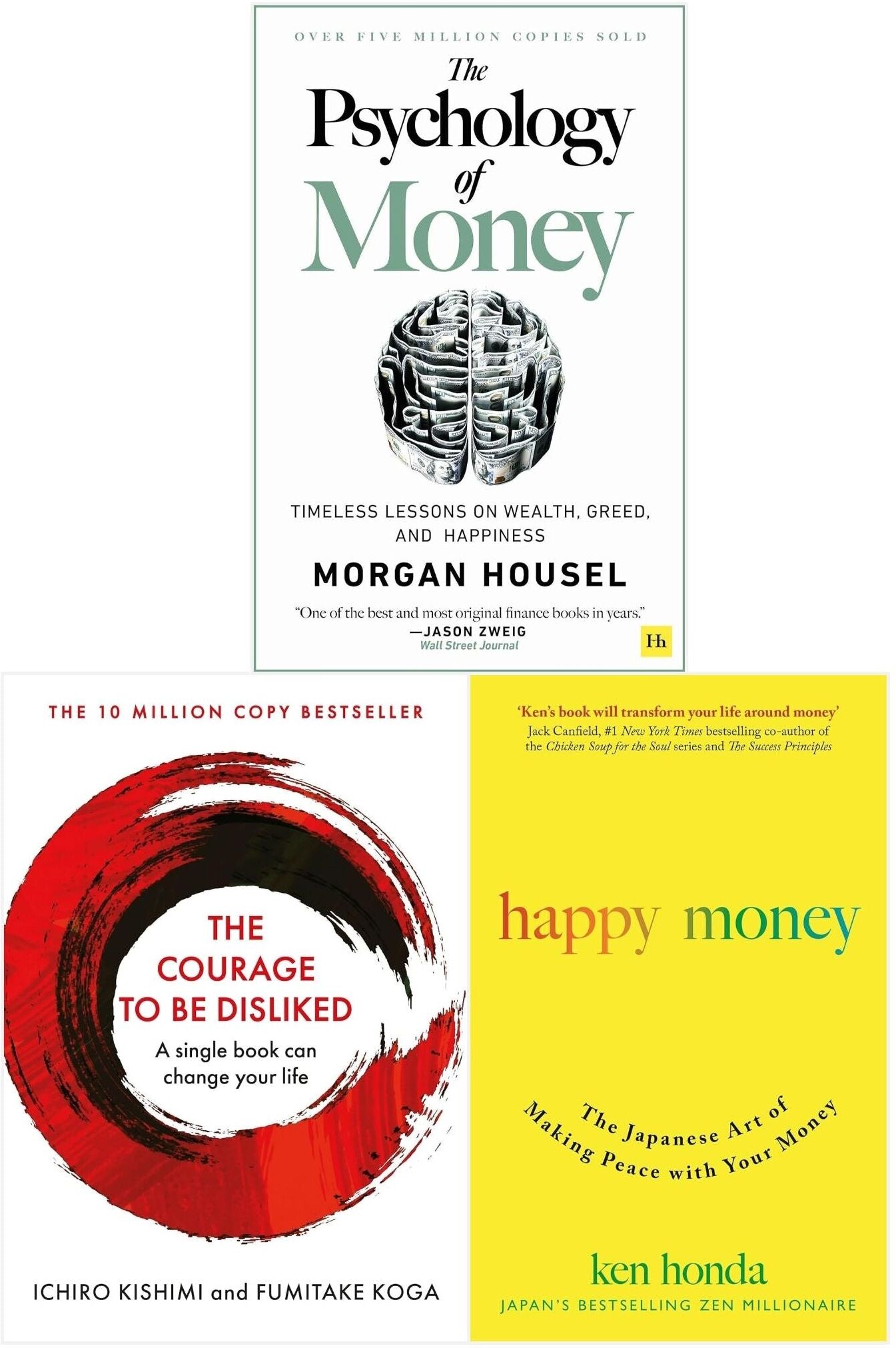
John Murray Happy Money, The Courage to be Disliked and Psychology of Money 3 Books Collection SetHappy Money Look around you - what do you see? You may discover to your surprise that the people who are most at peace with money are the ones who walk nimbly between having too little and having too much. They have found a balance between indulgence and austerity; between success and happiness; between motivation and inspiration; and between any number of other poles we tend to think of as either/or choices, but which in reality are simply posts on either side of a doorway through which we must pass. The Courage to be Disliked Stop people-pleasing and achieve true happiness. Millions have already benefited from the wisdom dispensed in The Courage to Be Disliked, its simple yet profound advice showing us how to harness our inner power to become the person we would like to be. A philosopher and a student have a discussion. Their conversation reveals a profoundly liberating way of thinking: by developing the courage to change, set healthy boundaries and resist the impulse to please others, it is possible to find genuine and lasting happiness. The Psychology of Money Doing well with money isn't necessarily about what you know. It's about how you behave. And behavior is hard to teach, even to really smart people. Money investing, personal finance, and business decisions is typically taught as a math-based field, where data and formulas tell us exactly what to do. But in the real world people don't make financial decisions on a spreadsheet. They make them at the dinner table, or in a meeting room, where personal history, your own unique view of the world, ego, pride, marketing, and odd incentives are scrambled together. In The Psychology of Money, award-winning author Morgan Housel shares 19 short stories exploring the strange ways people think about money and teaches you how to make better sense of one of life's most important topics.19,99 £*Shipping: 2,99 £Secure redirect to the provider
-
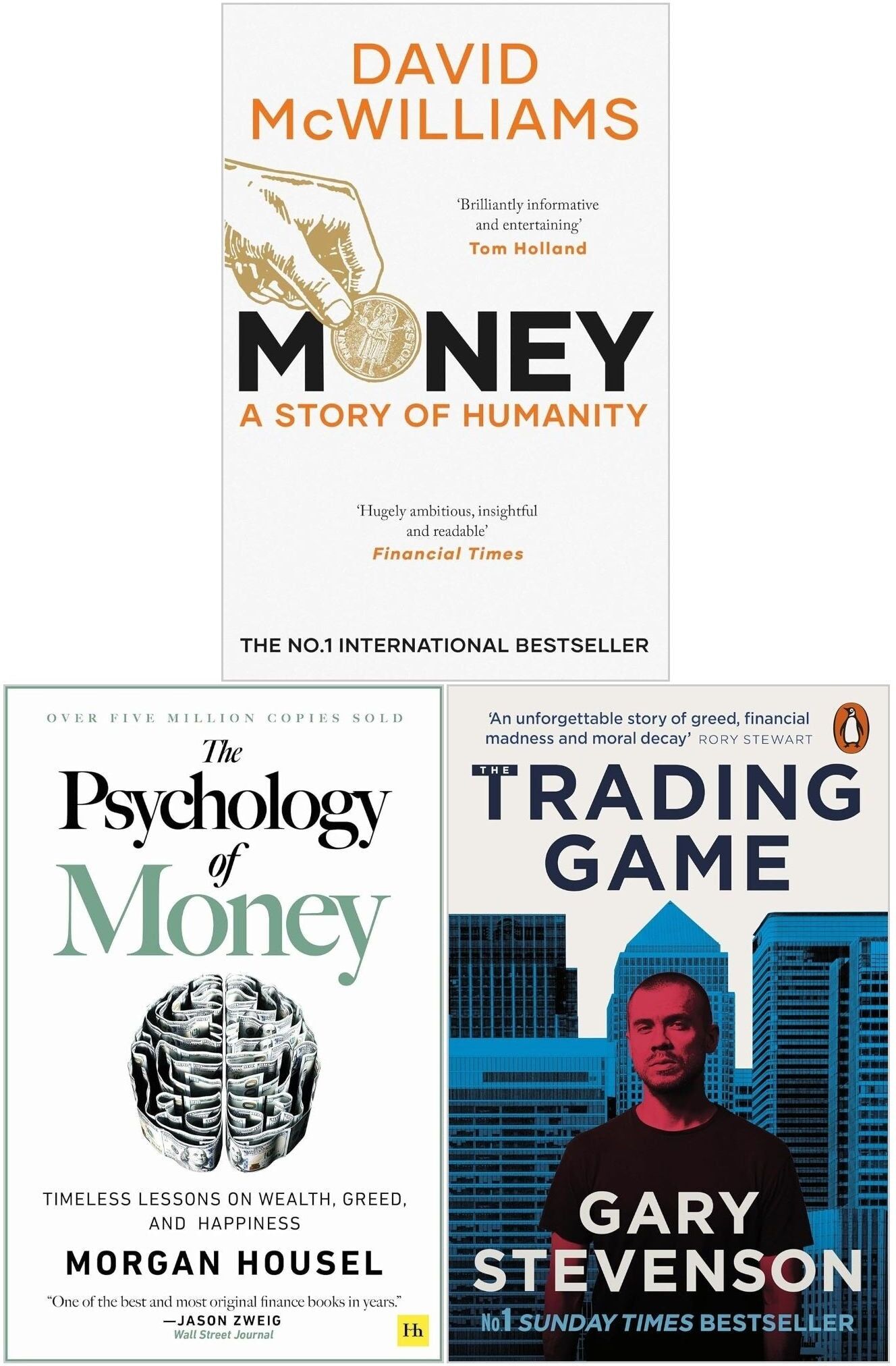
Harriman House Psychology of Money, The Trading Game and Money: A Story of Humanity 3 Books Collection SetPsychology of Money by Morgan Housel Doing well with money isn't necessarily about what you know. It's about how you behave. And behavior is hard to teach, even to really smart people. Money – investing, personal finance, and business decisions – is typically taught as a math-based field, where data and formulas tell us exactly what to do. But in the real world people don't make financial decisions on a spreadsheet. They make them at the dinner table, or in a meeting room, where personal history, your own unique view of the world, ego, pride, marketing, and odd incentives are scrambled together. The Trading Game by Gary Stevenson Ever since he was a kid, kicking broken footballs on the streets of East London in the shadow of Canary Wharf's skyscrapers, Gary wanted something better. Something a whole lot bigger. Then he won a competition run by a bank: 'The Trading Game'. The prize: a golden ticket to a new life, as the youngest trader in the whole city. A place where you could make more money than you'd ever imagined. Where your colleagues are dysfunctional maths geniuses, overfed public schoolboys and borderline psychopaths, yet they start to feel like family. Where soon you're the bank's most profitable trader, dealing in nearly a trillion dollars. A day. Where you dream of numbers in your sleep - and then stop sleeping at all. Money: A Story of Humanity by David McWilliams MONEY. The object of our desires. The engine of our genius. Humanity’s greatest invention. From clay tablets in Mesopotamia to today’s cryptocurrency, global economist David McWilliams takes us on an epic journey of innovation, disruption and transformation that is an astonishing new history of our species. The question is, over 5,000 years, have we changed money – or has money changed us?22,99 £*Shipping: 2,99 £Secure redirect to the provider
-
How much is the tax repayment for tax class 3?
The tax repayment for tax class 3 varies depending on individual circumstances such as income, deductions, and credits. Tax class 3 is typically associated with a higher tax refund compared to other tax classes, as it is designed for married couples where one spouse earns significantly more than the other. To determine the exact amount of tax repayment for tax class 3, it is recommended to consult with a tax professional or use a tax calculator to estimate the refund. **
-
When do you use the two words borrow and lend?
You use the word "borrow" when you are taking something from someone else with the intention of returning it. For example, "Can I borrow your book?" You use the word "lend" when you are giving something to someone else with the expectation that it will be returned. For example, "I can lend you my pen." **
-
How is the repayment of the KfW Education Loan done?
The repayment of the KfW Education Loan is typically done in monthly installments. Borrowers can choose to start repaying the loan either immediately after the disbursement of the funds or after a grace period of up to 18 months following the end of the standard period of study. The repayment period can extend up to 25 years, and the monthly installments are fixed for the first five years. After that, the monthly installments may be adjusted based on the borrower's income. Additionally, borrowers have the option to make early repayments or to pay off the loan in full without incurring any additional costs. **
-
What is a credit note for 3?
A credit note for 3 is a document issued by a seller to a buyer to acknowledge that the buyer has been credited with a certain amount of money. This credit note can be used by the buyer to offset future purchases or receive a refund. It serves as a record of the transaction and helps to maintain accurate accounting records for both parties involved. **

Can parents borrow money?
Yes, parents can borrow money through various means such as personal loans, home equity loans, or lines of credit. However, it is important for parents to carefully consider the terms and interest rates of the loan before borrowing to ensure they can comfortably repay the borrowed amount. Additionally, parents may also consider alternative options such as financial assistance programs or grants to help cover expenses instead of borrowing money. **
What is the continuation application 3?
Continuation application 3 is a type of patent application that allows an applicant to pursue additional claims or amendments to their original patent application. It is filed as a continuation of the original application, allowing the applicant to build on the original disclosure and pursue further protection for their invention. This type of application can be useful for refining the scope of the patent, addressing examiner's rejections, or pursuing additional claims that were not included in the original application. **
Top-Angebote
Products related to 3:
-
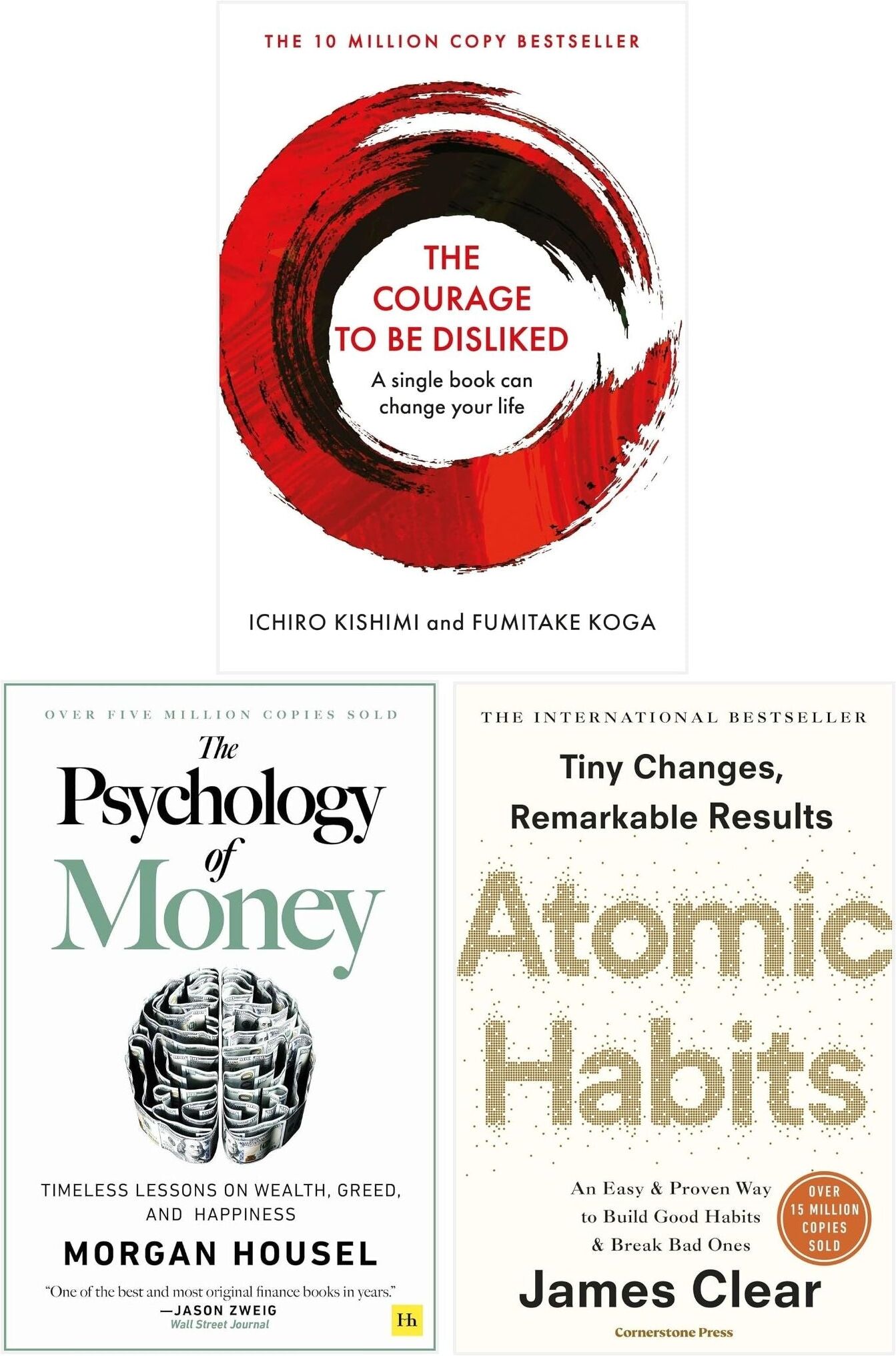
Harriman House The Psychology of Money, Atomic Habits & The Courage to Be Disliked – 3 Book Collection Set Bestselling Self-Development, Personal Finance, Self-HelUpgrade your mindset, habits, and financial thinking with this powerful 3-book collection set, featuring three of the most influential modern self-development titles. This essential bundle includes: The Psychology of Money by Morgan Housel – Discover how emotions and behaviour shape financial decisions and long-term wealth. Atomic Habits by James Clear – Learn how small habits can create powerful, lasting change. The Courage to Be Disliked by Ichiro Kishimi & Fumitake Koga** – Explore a transformative approach to happiness, freedom, and self-acceptance based on Adlerian psychology. Together, these books offer a complete guide to financial wisdom, personal growth, emotional resilience, and habit-building, making this set ideal for anyone looking to improve their life and mindset. Why Readers Love This Collection: Includes 3 bestselling modern self-development books Covers money, habits, mindset, and personal freedom Practical, easy-to-apply life lessons Perfect for beginners and experienced readers alike Ideal gift for motivation and self-improvement A must-have for anyone on a journey of personal growth, this collection delivers powerful insights for building a better, more successful life.22,99 £*Shipping: 2,99 £Secure redirect to the provider
-
Canelo Ltd. Kiley Dunbar Borrow a Bookshop Series Collection 3 Books SetThe Borrow a Bookshop Holiday Jude Crawley should be on top of the world. She's just graduated as a mature student, so can finally go public about her relationship with Philosophy professor, Mack. Until she sees Mack kissing another girl, and her dreams crumble. And worse, their dream holiday - running a tiny bookshop in the harbour village of Clove Lore for two weeks - is non-refundable. Throwing caution to the winds, Jude heads down to Devon, eager to immerse herself in literature and heal her broken heart. Something New at the Borrow a Bookshop The Borrow-a-Bookshop is recovering, seven months on from the winter flood that destroyed all its stock, and the latest temporary bookseller, Joy Foley, arrives in Clove Lore with her daughter, five-year-old Radia Pearl. As a tech expert, she'll be working on dragging the Bookshop into the twenty-first century. But what no one knows is that Joy is running from Radia Pearl's father. She can't settle down here or anywhere ... moving on is how she stays safe. So when Radia befriends Monty Bickleigh, ex-fisherman and the new cook at The Siren's Tail pub, despite herself, Joy finds herself growing closer to him, and the quirky community of Clove Lore. Love Letters at the Borrow a Bookshop Austen Archer is on her dream solo bookselling holiday, the new 'borrower' at the Borrow-A-Bookshop in Devon's Clove Lore. While she has always loved poetry, her words have dried up since being fired by her last boss, bestselling author, Callista Flyte, a year ago. Austen distracts herself with the Borrow-A-Bookshop, as well as her flirty online exchanges with an anonymous Parisian bookseller. Hiding from the world, Austen doesn't notice that wedding planner, Patti, is falling for her - and is too afraid to admit that she feels the chemistry too.10,99 £*Shipping: 2,99 £Secure redirect to the provider
-
Simon & Schuster Money: A Story of Humanity by David McWilliams Economic History & Global Finance ExplainedIn Money: A Story of Humanity, renowned economist David McWilliams explores the fascinating history of money — not just as currency, but as a powerful force that has shaped human civilisation, relationships, technology, and global society. From ancient barter systems to cryptocurrency revolutions, McWilliams reveals how money reflects our values, ambitions, fears, politics, and culture.Rich with storytelling, sharp insights, and humour, this book makes complex economic ideas accessible, engaging, and deeply human. Perfect for readers who enjoy exploring how history, psychology, markets, and power intersect, Money: A Story of Humanity provides a fresh, eye-opening look at how money drives — and is driven by — human behaviour. Ideal for fans of Yuval Noah Harari, Tim Harford, Niall Ferguson, and Mary Beard.7,99 £*Shipping: 2,99 £Secure redirect to the provider
-
Perfect Picks Market Toy Cash Register For Kids, Checkout Scanner, Play Money Food Set, , Credit Card Machine, Fruit Card Reader Toy Cash Register For Kids, Checkout Scanner, Play Money Food Set, , Credit Card Machine, Fruit Card ReaderEngage Your Child with Playful Learning The 33PCS Toy Cash Register for Kids with Checkout Scanner is a perfect way to help children develop essential skills while having fun! Designed for little ones, this interactive toy includes a realistic...59,97 $*Shipping: 0,00 $Secure redirect to the provider
-
Should I borrow money or take out a loan?
Borrowing money and taking out a loan are essentially the same thing, as both involve receiving funds that need to be repaid with interest. Whether you should borrow money or take out a loan depends on your specific financial situation and needs. If you need a large sum of money for a specific purpose, such as buying a house or car, then taking out a loan from a bank or financial institution may be the best option. However, if you only need a small amount of money for a short period of time, borrowing from a friend or family member may be a better choice to avoid high interest rates and fees. It's important to carefully consider your options and assess your ability to repay the borrowed funds before making a decision. **
-
How long can Otto borrow money without interest?
Otto can borrow money without interest for up to 30 days. After 30 days, he will start incurring interest on the borrowed amount. It's important for Otto to repay the borrowed money within this interest-free period to avoid any additional costs. **
-
How much is the tax repayment for tax class 3?
The tax repayment for tax class 3 varies depending on individual circumstances such as income, deductions, and credits. Tax class 3 is typically associated with a higher tax refund compared to other tax classes, as it is designed for married couples where one spouse earns significantly more than the other. To determine the exact amount of tax repayment for tax class 3, it is recommended to consult with a tax professional or use a tax calculator to estimate the refund. **
-
When do you use the two words borrow and lend?
You use the word "borrow" when you are taking something from someone else with the intention of returning it. For example, "Can I borrow your book?" You use the word "lend" when you are giving something to someone else with the expectation that it will be returned. For example, "I can lend you my pen." **
Similar search terms for 3
-
John Murray Happy Money, The Courage to be Disliked and Psychology of Money 3 Books Collection SetHappy Money Look around you - what do you see? You may discover to your surprise that the people who are most at peace with money are the ones who walk nimbly between having too little and having too much. They have found a balance between indulgence and austerity; between success and happiness; between motivation and inspiration; and between any number of other poles we tend to think of as either/or choices, but which in reality are simply posts on either side of a doorway through which we must pass. The Courage to be Disliked Stop people-pleasing and achieve true happiness. Millions have already benefited from the wisdom dispensed in The Courage to Be Disliked, its simple yet profound advice showing us how to harness our inner power to become the person we would like to be. A philosopher and a student have a discussion. Their conversation reveals a profoundly liberating way of thinking: by developing the courage to change, set healthy boundaries and resist the impulse to please others, it is possible to find genuine and lasting happiness. The Psychology of Money Doing well with money isn't necessarily about what you know. It's about how you behave. And behavior is hard to teach, even to really smart people. Money investing, personal finance, and business decisions is typically taught as a math-based field, where data and formulas tell us exactly what to do. But in the real world people don't make financial decisions on a spreadsheet. They make them at the dinner table, or in a meeting room, where personal history, your own unique view of the world, ego, pride, marketing, and odd incentives are scrambled together. In The Psychology of Money, award-winning author Morgan Housel shares 19 short stories exploring the strange ways people think about money and teaches you how to make better sense of one of life's most important topics.19,99 £*Shipping: 2,99 £Secure redirect to the provider
-
Harriman House Psychology of Money, The Trading Game and Money: A Story of Humanity 3 Books Collection SetPsychology of Money by Morgan Housel Doing well with money isn't necessarily about what you know. It's about how you behave. And behavior is hard to teach, even to really smart people. Money – investing, personal finance, and business decisions – is typically taught as a math-based field, where data and formulas tell us exactly what to do. But in the real world people don't make financial decisions on a spreadsheet. They make them at the dinner table, or in a meeting room, where personal history, your own unique view of the world, ego, pride, marketing, and odd incentives are scrambled together. The Trading Game by Gary Stevenson Ever since he was a kid, kicking broken footballs on the streets of East London in the shadow of Canary Wharf's skyscrapers, Gary wanted something better. Something a whole lot bigger. Then he won a competition run by a bank: 'The Trading Game'. The prize: a golden ticket to a new life, as the youngest trader in the whole city. A place where you could make more money than you'd ever imagined. Where your colleagues are dysfunctional maths geniuses, overfed public schoolboys and borderline psychopaths, yet they start to feel like family. Where soon you're the bank's most profitable trader, dealing in nearly a trillion dollars. A day. Where you dream of numbers in your sleep - and then stop sleeping at all. Money: A Story of Humanity by David McWilliams MONEY. The object of our desires. The engine of our genius. Humanity’s greatest invention. From clay tablets in Mesopotamia to today’s cryptocurrency, global economist David McWilliams takes us on an epic journey of innovation, disruption and transformation that is an astonishing new history of our species. The question is, over 5,000 years, have we changed money – or has money changed us?22,99 £*Shipping: 2,99 £Secure redirect to the provider
-
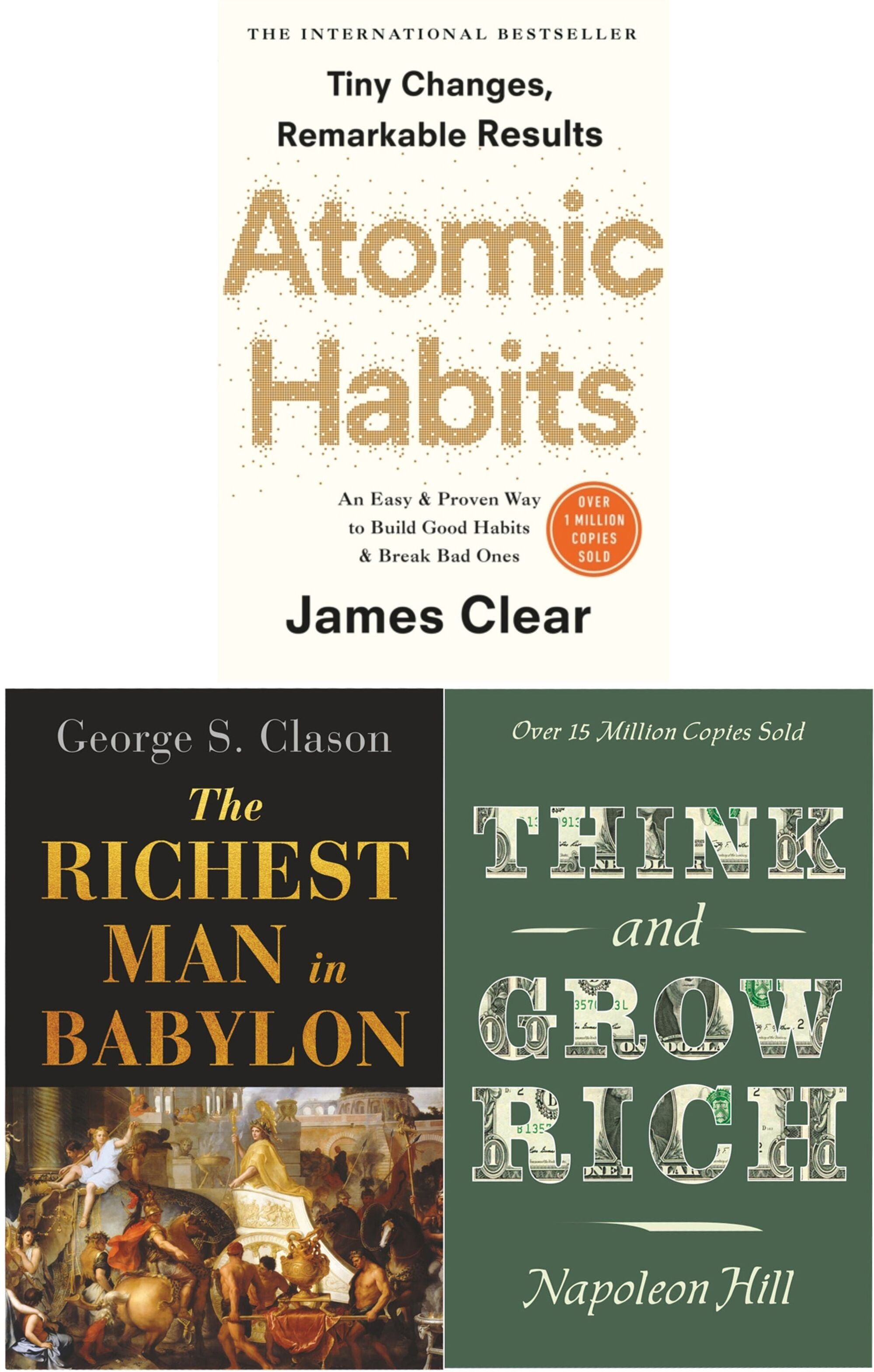
Cornerstone/Wilco Atomic Habits, The Richest Man in Babylon & Think and Grow Rich – 3 Book Collection Set Personal Finance, Wealth & Self-Development ClassicsTransform your habits, mindset, and financial future with this powerful 3-book collection set, featuring three of the most influential books on success, wealth, and personal growth. This essential bundle includes: Atomic Habits by James Clear – Discover how small, consistent habits can lead to extraordinary results and lasting success. The Richest Man in Babylon by George S. Clason – Learn timeless principles of saving, investing, and building wealth through simple financial wisdom. Think and Grow Rich by Napoleon Hill – Unlock the mindset and strategies behind achievement, success, and financial independence. Together, these books provide a complete guide to building better habits, mastering your finances, and developing a success-driven mindset. Ideal for entrepreneurs, professionals, students, and anyone looking to improve their life. Why Readers Love This Collection: Includes 3 bestselling self-help and finance classics Covers habits, wealth-building, and success mindset Practical, timeless advice for real-life results Suitable for beginners and experienced readers Perfect gift for motivation and personal growth A must-have bundle for anyone serious about success, this collection offers proven strategies for achieving long-term growth and financial freedom.14,99 £*Shipping: 2,99 £Secure redirect to the provider
-
The Psychology Of Money, The Art of Spending Money & Same as Ever by Morgan Housel 3 Books Collection Set - Non Fiction - Paperback Pan MacmillanTitles in this set: 1. Same as Ever 2. The Psychology of Money 3. The Art of Spending Money Description: Same as Ever When planning for the future we often ask, “What will the economy be doing this time next year?” Or, “What will be different ten years from now?” But forecasting is hard. The important events that will shape the future are inherently unpredictable. Instead, we should be asking a different question: What will be the same ten years from now? What will be the same one hundred years from now? Knowledge of the things that never change is more useful, and more important, than an uncertain prediction of an unknowable future. In Same As Ever, bestselling author Morgan Housel shares 24 short stories about the ways that life, behaviour, and business will always be the same. Armed with this knowledge of the unchanging, you will have a powerful new ability to think about risk, opportunity, and how to navigate the uncertainty of the future. The Psychology of Money Doing well with money isn't necessarily about what you know. It's about how you behave. And behavior is hard to teach, even to really smart people. Money investing, personal finance, and business decisions is typically taught as a math-based field, where data and formulas tell us exactly what to do. But in the real world people don't make financial decisions on a spreadsheet. They make them at the dinner table, or in a meeting room, where personal history, your own unique view of the world, ego, pride, marketing, and odd incentives are scrambled together. In The Psychology of Money, award-winning author Morgan Housel shares 19 short stories exploring the strange ways people think about money and teaches you how to make better sense of one of life's most important topics. The Art of Spending Money Can money buy happiness? Yes. Can spending it make you happier? Absolutely. Yet, many of us struggle to unlock its full potential – either by spending on things that don't bring as much joy as they should, or by avoiding investments that would truly enhance our mental well-being. In The Art of Spending Money, award-winning and global bestselling author Morgan Housel offers a refreshingly practical approach to managing wealth while finding deeper meaning and contentment. Instead of cookie-cutter financial advice, Housel provides you with psychological tools to navigate your personal relationship with money and optimise for happiness. Discover why people often mistake envy for admiration, how to align your expectations with your income, and ways to invest in future happiness while avoiding regret. Learn about the dangers of social debt and embrace the radical idea that the fastest way to build wealth is by going slow. The Art of Spending Money delves into the complexities that surround money – envy, social aspirations, identity, and insecurity – crucial aspects often missed in traditional financial books. Armed with new insights into money and wealth, you’ll learn to sidestep common spending...26,99 £*Shipping: 2,99 £Secure redirect to the provider
-
How is the repayment of the KfW Education Loan done?
The repayment of the KfW Education Loan is typically done in monthly installments. Borrowers can choose to start repaying the loan either immediately after the disbursement of the funds or after a grace period of up to 18 months following the end of the standard period of study. The repayment period can extend up to 25 years, and the monthly installments are fixed for the first five years. After that, the monthly installments may be adjusted based on the borrower's income. Additionally, borrowers have the option to make early repayments or to pay off the loan in full without incurring any additional costs. **
-
What is a credit note for 3?
A credit note for 3 is a document issued by a seller to a buyer to acknowledge that the buyer has been credited with a certain amount of money. This credit note can be used by the buyer to offset future purchases or receive a refund. It serves as a record of the transaction and helps to maintain accurate accounting records for both parties involved. **
-
Can parents borrow money?
Yes, parents can borrow money through various means such as personal loans, home equity loans, or lines of credit. However, it is important for parents to carefully consider the terms and interest rates of the loan before borrowing to ensure they can comfortably repay the borrowed amount. Additionally, parents may also consider alternative options such as financial assistance programs or grants to help cover expenses instead of borrowing money. **
-
What is the continuation application 3?
Continuation application 3 is a type of patent application that allows an applicant to pursue additional claims or amendments to their original patent application. It is filed as a continuation of the original application, allowing the applicant to build on the original disclosure and pursue further protection for their invention. This type of application can be useful for refining the scope of the patent, addressing examiner's rejections, or pursuing additional claims that were not included in the original application. **
* All prices are inclusive of VAT and, if applicable, plus shipping costs. The offer information is based on the details provided by the respective shop and is updated through automated processes. Real-time updates do not occur, so deviations can occur in individual cases. ** Note: Parts of this content were created by AI.