Buy loan-online.eu ?
We are moving the project
loan-online.eu .
Are you interested in purchasing the domain
loan-online.eu ?
domain@kv-gmbh.de · 0541-91531010
Buy loan-online.eu ?
What does 'leur' and 'lui' mean?
In French, 'leur' is a pronoun that means 'their' or 'them' when referring to a group of people or things. It is used to indicate possession or indirect object. On the other hand, 'lui' is a pronoun that means 'him' or 'her' when referring to a singular person. It is used to indicate possession or as an indirect object. **
How is "eux" or "leur" used in French?
"Eux" and "leur" are both pronouns used in French to refer to people or things. "Eux" is used as a direct object pronoun to replace a group of people or things, while "leur" is used as an indirect object pronoun to replace a group of people. For example, "Je les ai vus" (I saw them) uses "les" as a direct object pronoun, while "Je leur ai parlé" (I spoke to them) uses "leur" as an indirect object pronoun. **

Similar search terms for Leur
Top-Angebote
Products related to Leur:
-
Harriman House The Psychology of Money, Atomic Habits & The Courage to Be Disliked – 3 Book Collection Set Bestselling Self-Development, Personal Finance, Self-HelUpgrade your mindset, habits, and financial thinking with this powerful 3-book collection set, featuring three of the most influential modern self-development titles. This essential bundle includes: The Psychology of Money by Morgan Housel – Discover how emotions and behaviour shape financial decisions and long-term wealth. Atomic Habits by James Clear – Learn how small habits can create powerful, lasting change. The Courage to Be Disliked by Ichiro Kishimi & Fumitake Koga** – Explore a transformative approach to happiness, freedom, and self-acceptance based on Adlerian psychology. Together, these books offer a complete guide to financial wisdom, personal growth, emotional resilience, and habit-building, making this set ideal for anyone looking to improve their life and mindset. Why Readers Love This Collection: Includes 3 bestselling modern self-development books Covers money, habits, mindset, and personal freedom Practical, easy-to-apply life lessons Perfect for beginners and experienced readers alike Ideal gift for motivation and self-improvement A must-have for anyone on a journey of personal growth, this collection delivers powerful insights for building a better, more successful life.22,99 £*Shipping: 2,99 £Secure redirect to the provider
-
Canelo Ltd. Kiley Dunbar Borrow a Bookshop Series Collection 3 Books SetThe Borrow a Bookshop Holiday Jude Crawley should be on top of the world. She's just graduated as a mature student, so can finally go public about her relationship with Philosophy professor, Mack. Until she sees Mack kissing another girl, and her dreams crumble. And worse, their dream holiday - running a tiny bookshop in the harbour village of Clove Lore for two weeks - is non-refundable. Throwing caution to the winds, Jude heads down to Devon, eager to immerse herself in literature and heal her broken heart. Something New at the Borrow a Bookshop The Borrow-a-Bookshop is recovering, seven months on from the winter flood that destroyed all its stock, and the latest temporary bookseller, Joy Foley, arrives in Clove Lore with her daughter, five-year-old Radia Pearl. As a tech expert, she'll be working on dragging the Bookshop into the twenty-first century. But what no one knows is that Joy is running from Radia Pearl's father. She can't settle down here or anywhere ... moving on is how she stays safe. So when Radia befriends Monty Bickleigh, ex-fisherman and the new cook at The Siren's Tail pub, despite herself, Joy finds herself growing closer to him, and the quirky community of Clove Lore. Love Letters at the Borrow a Bookshop Austen Archer is on her dream solo bookselling holiday, the new 'borrower' at the Borrow-A-Bookshop in Devon's Clove Lore. While she has always loved poetry, her words have dried up since being fired by her last boss, bestselling author, Callista Flyte, a year ago. Austen distracts herself with the Borrow-A-Bookshop, as well as her flirty online exchanges with an anonymous Parisian bookseller. Hiding from the world, Austen doesn't notice that wedding planner, Patti, is falling for her - and is too afraid to admit that she feels the chemistry too.10,99 £*Shipping: 2,99 £Secure redirect to the provider
-
Sagebrook Home Handcrafted Terracotta Pottery Round Vase Modern Visual InterestThis small vase brings contemporary charm to any setting with its handcrafted pottery design and subtly textured terracotta finish, making it a standout among decorative home accents.40,45 $*Shipping: 0,00 $Secure redirect to the provider




-
How are the object pronouns lui and leur used?
The object pronouns lui and leur are used to replace indirect objects in French. Lui is used to replace singular indirect objects, while leur is used to replace plural indirect objects. These pronouns come before the verb in a sentence and agree in gender and number with the noun they are replacing. For example, "Je lui parle" means "I am talking to him/her" and "Je leur donne des cadeaux" means "I am giving them gifts." **
-
What is the difference between ses, leur and leurs?
Ses, leur, and leurs are all possessive adjectives in French, but they are used in different contexts. "Ses" is used to indicate possession by a singular third person, "leur" is used for a singular third person, and "leurs" is used for plural third person. For example, "ses chaussures" means "his/her shoes," "leur maison" means "their house," and "leurs voitures" means "their cars." It's important to pay attention to the number and gender of the noun being possessed in order to choose the correct possessive adjective. **
-
'I don't understand the use of lui and leur?'
In French, "lui" and "leur" are both used as indirect object pronouns to replace nouns that are the recipients of the action. "Lui" is used to refer to a singular masculine or feminine noun, while "leur" is used to refer to a plural noun. For example, "Je lui ai donné le livre" means "I gave him/her the book," and "Je leur ai donné les livres" means "I gave them the books." It's important to remember that these pronouns must agree in gender and number with the noun they are replacing. **
-
When do I use leur and leurs in French?
You use "leur" when you want to indicate possession or belonging for a singular noun, and "leurs" when you want to indicate possession or belonging for plural nouns. For example, "leur maison" means "their house" (singular), and "leurs voitures" means "their cars" (plural). **


Should I borrow money or take out a loan?
Borrowing money and taking out a loan are essentially the same thing, as both involve receiving funds that need to be repaid with interest. Whether you should borrow money or take out a loan depends on your specific financial situation and needs. If you need a large sum of money for a specific purpose, such as buying a house or car, then taking out a loan from a bank or financial institution may be the best option. However, if you only need a small amount of money for a short period of time, borrowing from a friend or family member may be a better choice to avoid high interest rates and fees. It's important to carefully consider your options and assess your ability to repay the borrowed funds before making a decision. **
How do you use the object pronouns lui and leur?
The object pronoun "lui" is used to replace indirect objects referring to a singular person, while "leur" is used to replace indirect objects referring to plural people. For example, "Je lui parle" means "I am talking to him/her" and "Je leur donne des cadeaux" means "I am giving gifts to them." These pronouns come before the verb in a sentence and help avoid repetition of the indirect object. **
Top-Angebote
Products related to Leur:
-
Simon & Schuster Money: A Story of Humanity by David McWilliams Economic History & Global Finance ExplainedIn Money: A Story of Humanity, renowned economist David McWilliams explores the fascinating history of money — not just as currency, but as a powerful force that has shaped human civilisation, relationships, technology, and global society. From ancient barter systems to cryptocurrency revolutions, McWilliams reveals how money reflects our values, ambitions, fears, politics, and culture.Rich with storytelling, sharp insights, and humour, this book makes complex economic ideas accessible, engaging, and deeply human. Perfect for readers who enjoy exploring how history, psychology, markets, and power intersect, Money: A Story of Humanity provides a fresh, eye-opening look at how money drives — and is driven by — human behaviour. Ideal for fans of Yuval Noah Harari, Tim Harford, Niall Ferguson, and Mary Beard.7,99 £*Shipping: 2,99 £Secure redirect to the provider
-
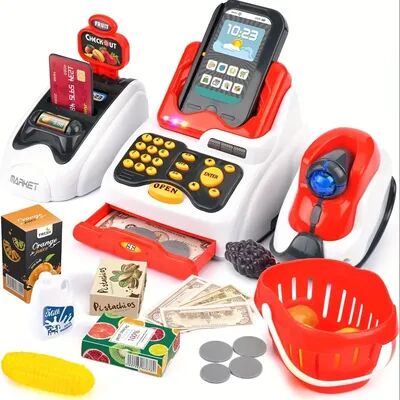
Perfect Picks Market Toy Cash Register For Kids, Checkout Scanner, Play Money Food Set, , Credit Card Machine, Fruit Card Reader Toy Cash Register For Kids, Checkout Scanner, Play Money Food Set, , Credit Card Machine, Fruit Card ReaderEngage Your Child with Playful Learning The 33PCS Toy Cash Register for Kids with Checkout Scanner is a perfect way to help children develop essential skills while having fun! Designed for little ones, this interactive toy includes a realistic...59,97 $*Shipping: 0,00 $Secure redirect to the provider
-
Harriman House The Psychology of Money, Atomic Habits & The Courage to Be Disliked – 3 Book Collection Set Bestselling Self-Development, Personal Finance, Self-HelUpgrade your mindset, habits, and financial thinking with this powerful 3-book collection set, featuring three of the most influential modern self-development titles. This essential bundle includes: The Psychology of Money by Morgan Housel – Discover how emotions and behaviour shape financial decisions and long-term wealth. Atomic Habits by James Clear – Learn how small habits can create powerful, lasting change. The Courage to Be Disliked by Ichiro Kishimi & Fumitake Koga** – Explore a transformative approach to happiness, freedom, and self-acceptance based on Adlerian psychology. Together, these books offer a complete guide to financial wisdom, personal growth, emotional resilience, and habit-building, making this set ideal for anyone looking to improve their life and mindset. Why Readers Love This Collection: Includes 3 bestselling modern self-development books Covers money, habits, mindset, and personal freedom Practical, easy-to-apply life lessons Perfect for beginners and experienced readers alike Ideal gift for motivation and self-improvement A must-have for anyone on a journey of personal growth, this collection delivers powerful insights for building a better, more successful life.22,99 £*Shipping: 2,99 £Secure redirect to the provider
-
Canelo Ltd. Kiley Dunbar Borrow a Bookshop Series Collection 3 Books SetThe Borrow a Bookshop Holiday Jude Crawley should be on top of the world. She's just graduated as a mature student, so can finally go public about her relationship with Philosophy professor, Mack. Until she sees Mack kissing another girl, and her dreams crumble. And worse, their dream holiday - running a tiny bookshop in the harbour village of Clove Lore for two weeks - is non-refundable. Throwing caution to the winds, Jude heads down to Devon, eager to immerse herself in literature and heal her broken heart. Something New at the Borrow a Bookshop The Borrow-a-Bookshop is recovering, seven months on from the winter flood that destroyed all its stock, and the latest temporary bookseller, Joy Foley, arrives in Clove Lore with her daughter, five-year-old Radia Pearl. As a tech expert, she'll be working on dragging the Bookshop into the twenty-first century. But what no one knows is that Joy is running from Radia Pearl's father. She can't settle down here or anywhere ... moving on is how she stays safe. So when Radia befriends Monty Bickleigh, ex-fisherman and the new cook at The Siren's Tail pub, despite herself, Joy finds herself growing closer to him, and the quirky community of Clove Lore. Love Letters at the Borrow a Bookshop Austen Archer is on her dream solo bookselling holiday, the new 'borrower' at the Borrow-A-Bookshop in Devon's Clove Lore. While she has always loved poetry, her words have dried up since being fired by her last boss, bestselling author, Callista Flyte, a year ago. Austen distracts herself with the Borrow-A-Bookshop, as well as her flirty online exchanges with an anonymous Parisian bookseller. Hiding from the world, Austen doesn't notice that wedding planner, Patti, is falling for her - and is too afraid to admit that she feels the chemistry too.10,99 £*Shipping: 2,99 £Secure redirect to the provider
-
What does 'leur' and 'lui' mean?
In French, 'leur' is a pronoun that means 'their' or 'them' when referring to a group of people or things. It is used to indicate possession or indirect object. On the other hand, 'lui' is a pronoun that means 'him' or 'her' when referring to a singular person. It is used to indicate possession or as an indirect object. **
-
How is "eux" or "leur" used in French?
"Eux" and "leur" are both pronouns used in French to refer to people or things. "Eux" is used as a direct object pronoun to replace a group of people or things, while "leur" is used as an indirect object pronoun to replace a group of people. For example, "Je les ai vus" (I saw them) uses "les" as a direct object pronoun, while "Je leur ai parlé" (I spoke to them) uses "leur" as an indirect object pronoun. **
-
How are the object pronouns lui and leur used?
The object pronouns lui and leur are used to replace indirect objects in French. Lui is used to replace singular indirect objects, while leur is used to replace plural indirect objects. These pronouns come before the verb in a sentence and agree in gender and number with the noun they are replacing. For example, "Je lui parle" means "I am talking to him/her" and "Je leur donne des cadeaux" means "I am giving them gifts." **
-
What is the difference between ses, leur and leurs?
Ses, leur, and leurs are all possessive adjectives in French, but they are used in different contexts. "Ses" is used to indicate possession by a singular third person, "leur" is used for a singular third person, and "leurs" is used for plural third person. For example, "ses chaussures" means "his/her shoes," "leur maison" means "their house," and "leurs voitures" means "their cars." It's important to pay attention to the number and gender of the noun being possessed in order to choose the correct possessive adjective. **
Similar search terms for Leur
-
Sagebrook Home Handcrafted Terracotta Pottery Round Vase Modern Visual InterestThis small vase brings contemporary charm to any setting with its handcrafted pottery design and subtly textured terracotta finish, making it a standout among decorative home accents.40,45 $*Shipping: 0,00 $Secure redirect to the provider
-
Sagebrook Home Handcrafted Terracotta Pottery Round Vase Modern Visual InterestThis small vase brings contemporary charm to any setting with its handcrafted pottery design and subtly textured terracotta finish, making it a standout among decorative home accents.42,56 $*Shipping: 0,00 $Secure redirect to the provider
-
Sagebrook Home Handcrafted Terracotta Pottery Round Vase Modern Visual InterestThis small vase brings contemporary charm to any setting with its handcrafted pottery design and subtly textured terracotta finish, making it a standout among decorative home accents.65,99 $*Shipping: 0,00 $Secure redirect to the provider
-
'I don't understand the use of lui and leur?'
In French, "lui" and "leur" are both used as indirect object pronouns to replace nouns that are the recipients of the action. "Lui" is used to refer to a singular masculine or feminine noun, while "leur" is used to refer to a plural noun. For example, "Je lui ai donné le livre" means "I gave him/her the book," and "Je leur ai donné les livres" means "I gave them the books." It's important to remember that these pronouns must agree in gender and number with the noun they are replacing. **
-
When do I use leur and leurs in French?
You use "leur" when you want to indicate possession or belonging for a singular noun, and "leurs" when you want to indicate possession or belonging for plural nouns. For example, "leur maison" means "their house" (singular), and "leurs voitures" means "their cars" (plural). **
-
Should I borrow money or take out a loan?
Borrowing money and taking out a loan are essentially the same thing, as both involve receiving funds that need to be repaid with interest. Whether you should borrow money or take out a loan depends on your specific financial situation and needs. If you need a large sum of money for a specific purpose, such as buying a house or car, then taking out a loan from a bank or financial institution may be the best option. However, if you only need a small amount of money for a short period of time, borrowing from a friend or family member may be a better choice to avoid high interest rates and fees. It's important to carefully consider your options and assess your ability to repay the borrowed funds before making a decision. **
-
How do you use the object pronouns lui and leur?
The object pronoun "lui" is used to replace indirect objects referring to a singular person, while "leur" is used to replace indirect objects referring to plural people. For example, "Je lui parle" means "I am talking to him/her" and "Je leur donne des cadeaux" means "I am giving gifts to them." These pronouns come before the verb in a sentence and help avoid repetition of the indirect object. **
* All prices are inclusive of VAT and, if applicable, plus shipping costs. The offer information is based on the details provided by the respective shop and is updated through automated processes. Real-time updates do not occur, so deviations can occur in individual cases. ** Note: Parts of this content were created by AI.