Buy loan-online.eu ?
We are moving the project
loan-online.eu .
Are you interested in purchasing the domain
loan-online.eu ?
domain@kv-gmbh.de · 0541-91531010
Buy loan-online.eu ?
Should I borrow money or take out a loan?
Borrowing money and taking out a loan are essentially the same thing, as both involve receiving funds that need to be repaid with interest. Whether you should borrow money or take out a loan depends on your specific financial situation and needs. If you need a large sum of money for a specific purpose, such as buying a house or car, then taking out a loan from a bank or financial institution may be the best option. However, if you only need a small amount of money for a short period of time, borrowing from a friend or family member may be a better choice to avoid high interest rates and fees. It's important to carefully consider your options and assess your ability to repay the borrowed funds before making a decision. **
How long can Otto borrow money without interest?
Otto can borrow money without interest for up to 30 days. After 30 days, he will start incurring interest on the borrowed amount. It's important for Otto to repay the borrowed money within this interest-free period to avoid any additional costs. **

Similar search terms for Same
Top-Angebote
Products related to Same:
-
Brushtech Same As Steel WoolBrushtech Cast Iron Cookware Cleaning Brush – Heavy Duty Tough Bristles for Scrubbing Skillets, Griddles & Grill Pans, Ergonomic Strong Plastic Handle Built for Maximum Control & Durability - New Keep cookware clean and well-maintained with the...25,49 $*Shipping: 0,00 $Secure redirect to the provider
-
The Psychology Of Money, The Art of Spending Money & Same as Ever by Morgan Housel 3 Books Collection Set - Non Fiction - Paperback Pan MacmillanTitles in this set: 1. Same as Ever 2. The Psychology of Money 3. The Art of Spending Money Description: Same as Ever When planning for the future we often ask, “What will the economy be doing this time next year?” Or, “What will be different ten years from now?” But forecasting is hard. The important events that will shape the future are inherently unpredictable. Instead, we should be asking a different question: What will be the same ten years from now? What will be the same one hundred years from now? Knowledge of the things that never change is more useful, and more important, than an uncertain prediction of an unknowable future. In Same As Ever, bestselling author Morgan Housel shares 24 short stories about the ways that life, behaviour, and business will always be the same. Armed with this knowledge of the unchanging, you will have a powerful new ability to think about risk, opportunity, and how to navigate the uncertainty of the future. The Psychology of Money Doing well with money isn't necessarily about what you know. It's about how you behave. And behavior is hard to teach, even to really smart people. Money investing, personal finance, and business decisions is typically taught as a math-based field, where data and formulas tell us exactly what to do. But in the real world people don't make financial decisions on a spreadsheet. They make them at the dinner table, or in a meeting room, where personal history, your own unique view of the world, ego, pride, marketing, and odd incentives are scrambled together. In The Psychology of Money, award-winning author Morgan Housel shares 19 short stories exploring the strange ways people think about money and teaches you how to make better sense of one of life's most important topics. The Art of Spending Money Can money buy happiness? Yes. Can spending it make you happier? Absolutely. Yet, many of us struggle to unlock its full potential – either by spending on things that don't bring as much joy as they should, or by avoiding investments that would truly enhance our mental well-being. In The Art of Spending Money, award-winning and global bestselling author Morgan Housel offers a refreshingly practical approach to managing wealth while finding deeper meaning and contentment. Instead of cookie-cutter financial advice, Housel provides you with psychological tools to navigate your personal relationship with money and optimise for happiness. Discover why people often mistake envy for admiration, how to align your expectations with your income, and ways to invest in future happiness while avoiding regret. Learn about the dangers of social debt and embrace the radical idea that the fastest way to build wealth is by going slow. The Art of Spending Money delves into the complexities that surround money – envy, social aspirations, identity, and insecurity – crucial aspects often missed in traditional financial books. Armed with new insights into money and wealth, you’ll learn to sidestep common spending...26,99 £*Shipping: 2,99 £Secure redirect to the provider
-
Pan Macmillan UK Ltd The Psychology Of Money, The Art of Spending Money and Same as Ever by Morgan Housel 3 Books Collection SetThe Psychology Of Money, The Art of Spending Money and Same as Ever by Morgan Housel 3 Books Collection Set Titles in this set: 1. Same as Ever 2. The Psychology of Money 3. The Art of Spending Money Description: Same as Ever When planning for the future we often ask, “What will the economy be doing this time next year?” Or, “What will be different ten years from now?” But forecasting is hard. The important events that will shape the future are inherently unpredictable. Instead, we should be asking a different question: What will be the same ten years from now? What will be the same one hundred years from now? Knowledge of the things that never change is more useful, and more important, than an uncertain prediction of an unknowable future. In Same As Ever, bestselling author Morgan Housel shares 24 short stories about the ways that life, behaviour, and business will always be the same. Armed with this knowledge of the unchanging, you will have a powerful new ability to think about risk, opportunity, and how to navigate the uncertainty of the future. The Psychology of Money Doing well with money isn't necessarily about what you know. It's about how you behave. And behavior is hard to teach, even to really smart people. Money investing, personal finance, and business decisions is typically taught as a math-based field, where data and formulas tell us exactly what to do. But in the real world people don't make financial decisions on a spreadsheet. They make them at the dinner table, or in a meeting room, where personal history, your own unique view of the world, ego, pride, marketing, and odd incentives are scrambled together. In The Psychology of Money, award-winning author Morgan Housel shares 19 short stories exploring the strange ways people think about money and teaches you how to make better sense of one of life's most important topics. The Art of Spending Money Can money buy happiness? Yes. Can spending it make you happier? Absolutely. Yet, many of us struggle to unlock its full potential – either by spending on things that don't bring as much joy as they should, or by avoiding investments that would truly enhance our mental well-being. In The Art of Spending Money, award-winning and global bestselling author Morgan Housel offers a refreshingly practical approach to managing wealth while finding deeper meaning and contentment. Instead of cookie-cutter financial advice, Housel provides you with psychological tools to navigate your personal relationship with money and optimise for happiness. Discover why people often mistake envy for admiration, how to align your expectations with your income, and ways to invest in future happiness while avoiding regret. Learn about the dangers of social debt and embrace the radical idea that the fastest way to build wealth is by going slow. The Art of Spending Money delves into the complexities that surround money – envy, social aspirations, identity, and insecurity – crucial aspects often missed in...24,99 £*Shipping: 2,99 £Secure redirect to the provider
-
Royal Velvet Turkish Cotton Towel - Same Size SetIntroducing the Royal Velvet Turkish Towel Sets, a pinnacle of luxury and comfort for your bathroom. Crafted from 100% Turkish cotton, these towels are spun and woven in Turkey to exacting standards.25,83 $*Shipping: 0,00 $Secure redirect to the provider


-
Can you mix gear oil with the same approval?
Yes, you can mix gear oil with the same approval. Gear oils with the same approval are designed to be compatible with each other, so mixing them should not cause any issues. However, it is always best to consult the manufacturer's recommendations and guidelines before mixing gear oils to ensure compatibility and optimal performance. **
-
Can I use the same application again with the same employer?
Yes, you can use the same application again with the same employer if you are applying for a different position or if the employer has multiple job openings that you are interested in. However, it's important to make sure that your application is updated and tailored to the specific job you are applying for. You may need to adjust your cover letter, resume, and any other application materials to highlight your qualifications and experience relevant to the new position. **
-
When do you use the two words borrow and lend?
You use the word "borrow" when you are taking something from someone else with the intention of returning it. For example, "Can I borrow your book?" You use the word "lend" when you are giving something to someone else with the expectation that it will be returned. For example, "I can lend you my pen." **
-
How is the repayment of the KfW Education Loan done?
The repayment of the KfW Education Loan is typically done in monthly installments. Borrowers can choose to start repaying the loan either immediately after the disbursement of the funds or after a grace period of up to 18 months following the end of the standard period of study. The repayment period can extend up to 25 years, and the monthly installments are fixed for the first five years. After that, the monthly installments may be adjusted based on the borrower's income. Additionally, borrowers have the option to make early repayments or to pay off the loan in full without incurring any additional costs. **


Can parents borrow money?
Yes, parents can borrow money through various means such as personal loans, home equity loans, or lines of credit. However, it is important for parents to carefully consider the terms and interest rates of the loan before borrowing to ensure they can comfortably repay the borrowed amount. Additionally, parents may also consider alternative options such as financial assistance programs or grants to help cover expenses instead of borrowing money. **
Should one lend him money?
Whether or not to lend someone money depends on the individual's financial situation and the nature of the relationship. It's important to consider the person's track record with borrowing and repaying money, as well as their current ability to repay the loan. Additionally, the lender should assess their own financial situation and the potential impact of the loan on their own stability. Open communication and clear terms for repayment can help mitigate potential issues. Ultimately, the decision to lend money should be made carefully and with consideration for both parties involved. **
Top-Angebote
Products related to Same:
-
Harriman House Same as Ever & The Psychology Of Money 2 Books Collection Set by Morgan HouselTitles in this set:1. Same as Ever2. The Psychology of MoneyDescription:Same as Ever When planning for the future we often ask, “What will the economy be doing this time next year?” Or, “What will be different ten years from now?”But forecasting is hard. The important events that will shape the future are inherently unpredictable.Instead, we should be asking a different question:What will be the same ten years from now?What will be the same one hundred years from now?Knowledge of the things that never change is more useful, and more important, than an uncertain prediction of an unknowable future.In Same As Ever, bestselling author Morgan Housel shares 24 short stories about the ways that life, behaviour, and business will always be the same.Armed with this knowledge of the unchanging, you will have a powerful new ability to think about risk, opportunity, and how to navigate the uncertainty of the future.The Psychology of Money Doing well with money isn't necessarily about what you know. It's about how you behave. And behavior is hard to teach, even to really smart people.Money investing, personal finance, and business decisions is typically taught as a math-based field, where data and formulas tell us exactly what to do. But in the real world people don't make financial decisions on a spreadsheet. They make them at the dinner table, or in a meeting room, where personal history, your own unique view of the world, ego, pride, marketing, and odd incentives are scrambled together.In The Psychology of Money, award-winning author Morgan Housel shares 19 short stories exploring the strange ways people think about money and teaches you how to make better sense of one of life's most important topics.14,50 £*Shipping: 2,99 £Secure redirect to the provider
-
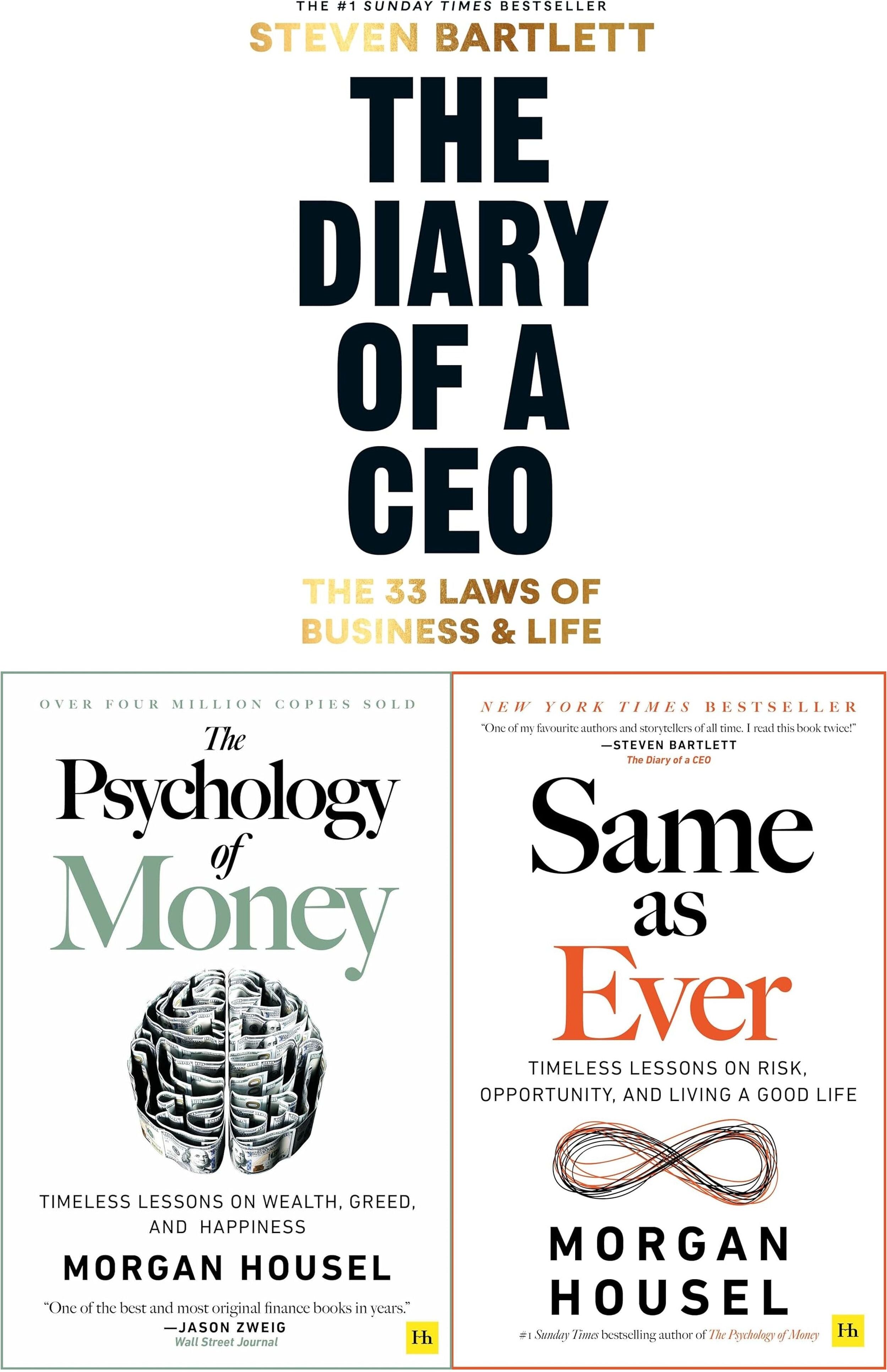
Ebury Psychology of Money, Same as Ever & Diary of a CEO 3 Book Set – Business & Mindset CollectionThe Psychology of Money, Same as Ever and The Diary of a CEO 3 Books Collection Set - Bestselling Authors BY - Morgan Housel, Steven Bartlett TITLE IN THIS SET: The Diary of a CEO: The 33 Laws of Business and Life The Psychology of Money: Timeless lessons on wealth, greed, and happiness Same as Ever: Timeless Lessons on Risk, Opportunity and Living a Good Life, from the Bestselling Author of 'The Psychology of Money'22,95 £*Shipping: 2,99 £Secure redirect to the provider
-
Brushtech Same As Steel WoolBrushtech Cast Iron Cookware Cleaning Brush – Heavy Duty Tough Bristles for Scrubbing Skillets, Griddles & Grill Pans, Ergonomic Strong Plastic Handle Built for Maximum Control & Durability - New Keep cookware clean and well-maintained with the...25,49 $*Shipping: 0,00 $Secure redirect to the provider
-
The Psychology Of Money, The Art of Spending Money & Same as Ever by Morgan Housel 3 Books Collection Set - Non Fiction - Paperback Pan MacmillanTitles in this set: 1. Same as Ever 2. The Psychology of Money 3. The Art of Spending Money Description: Same as Ever When planning for the future we often ask, “What will the economy be doing this time next year?” Or, “What will be different ten years from now?” But forecasting is hard. The important events that will shape the future are inherently unpredictable. Instead, we should be asking a different question: What will be the same ten years from now? What will be the same one hundred years from now? Knowledge of the things that never change is more useful, and more important, than an uncertain prediction of an unknowable future. In Same As Ever, bestselling author Morgan Housel shares 24 short stories about the ways that life, behaviour, and business will always be the same. Armed with this knowledge of the unchanging, you will have a powerful new ability to think about risk, opportunity, and how to navigate the uncertainty of the future. The Psychology of Money Doing well with money isn't necessarily about what you know. It's about how you behave. And behavior is hard to teach, even to really smart people. Money investing, personal finance, and business decisions is typically taught as a math-based field, where data and formulas tell us exactly what to do. But in the real world people don't make financial decisions on a spreadsheet. They make them at the dinner table, or in a meeting room, where personal history, your own unique view of the world, ego, pride, marketing, and odd incentives are scrambled together. In The Psychology of Money, award-winning author Morgan Housel shares 19 short stories exploring the strange ways people think about money and teaches you how to make better sense of one of life's most important topics. The Art of Spending Money Can money buy happiness? Yes. Can spending it make you happier? Absolutely. Yet, many of us struggle to unlock its full potential – either by spending on things that don't bring as much joy as they should, or by avoiding investments that would truly enhance our mental well-being. In The Art of Spending Money, award-winning and global bestselling author Morgan Housel offers a refreshingly practical approach to managing wealth while finding deeper meaning and contentment. Instead of cookie-cutter financial advice, Housel provides you with psychological tools to navigate your personal relationship with money and optimise for happiness. Discover why people often mistake envy for admiration, how to align your expectations with your income, and ways to invest in future happiness while avoiding regret. Learn about the dangers of social debt and embrace the radical idea that the fastest way to build wealth is by going slow. The Art of Spending Money delves into the complexities that surround money – envy, social aspirations, identity, and insecurity – crucial aspects often missed in traditional financial books. Armed with new insights into money and wealth, you’ll learn to sidestep common spending...26,99 £*Shipping: 2,99 £Secure redirect to the provider
-
Should I borrow money or take out a loan?
Borrowing money and taking out a loan are essentially the same thing, as both involve receiving funds that need to be repaid with interest. Whether you should borrow money or take out a loan depends on your specific financial situation and needs. If you need a large sum of money for a specific purpose, such as buying a house or car, then taking out a loan from a bank or financial institution may be the best option. However, if you only need a small amount of money for a short period of time, borrowing from a friend or family member may be a better choice to avoid high interest rates and fees. It's important to carefully consider your options and assess your ability to repay the borrowed funds before making a decision. **
-
How long can Otto borrow money without interest?
Otto can borrow money without interest for up to 30 days. After 30 days, he will start incurring interest on the borrowed amount. It's important for Otto to repay the borrowed money within this interest-free period to avoid any additional costs. **
-
Can you mix gear oil with the same approval?
Yes, you can mix gear oil with the same approval. Gear oils with the same approval are designed to be compatible with each other, so mixing them should not cause any issues. However, it is always best to consult the manufacturer's recommendations and guidelines before mixing gear oils to ensure compatibility and optimal performance. **
-
Can I use the same application again with the same employer?
Yes, you can use the same application again with the same employer if you are applying for a different position or if the employer has multiple job openings that you are interested in. However, it's important to make sure that your application is updated and tailored to the specific job you are applying for. You may need to adjust your cover letter, resume, and any other application materials to highlight your qualifications and experience relevant to the new position. **
Similar search terms for Same
-
Pan Macmillan UK Ltd The Psychology Of Money, The Art of Spending Money and Same as Ever by Morgan Housel 3 Books Collection SetThe Psychology Of Money, The Art of Spending Money and Same as Ever by Morgan Housel 3 Books Collection Set Titles in this set: 1. Same as Ever 2. The Psychology of Money 3. The Art of Spending Money Description: Same as Ever When planning for the future we often ask, “What will the economy be doing this time next year?” Or, “What will be different ten years from now?” But forecasting is hard. The important events that will shape the future are inherently unpredictable. Instead, we should be asking a different question: What will be the same ten years from now? What will be the same one hundred years from now? Knowledge of the things that never change is more useful, and more important, than an uncertain prediction of an unknowable future. In Same As Ever, bestselling author Morgan Housel shares 24 short stories about the ways that life, behaviour, and business will always be the same. Armed with this knowledge of the unchanging, you will have a powerful new ability to think about risk, opportunity, and how to navigate the uncertainty of the future. The Psychology of Money Doing well with money isn't necessarily about what you know. It's about how you behave. And behavior is hard to teach, even to really smart people. Money investing, personal finance, and business decisions is typically taught as a math-based field, where data and formulas tell us exactly what to do. But in the real world people don't make financial decisions on a spreadsheet. They make them at the dinner table, or in a meeting room, where personal history, your own unique view of the world, ego, pride, marketing, and odd incentives are scrambled together. In The Psychology of Money, award-winning author Morgan Housel shares 19 short stories exploring the strange ways people think about money and teaches you how to make better sense of one of life's most important topics. The Art of Spending Money Can money buy happiness? Yes. Can spending it make you happier? Absolutely. Yet, many of us struggle to unlock its full potential – either by spending on things that don't bring as much joy as they should, or by avoiding investments that would truly enhance our mental well-being. In The Art of Spending Money, award-winning and global bestselling author Morgan Housel offers a refreshingly practical approach to managing wealth while finding deeper meaning and contentment. Instead of cookie-cutter financial advice, Housel provides you with psychological tools to navigate your personal relationship with money and optimise for happiness. Discover why people often mistake envy for admiration, how to align your expectations with your income, and ways to invest in future happiness while avoiding regret. Learn about the dangers of social debt and embrace the radical idea that the fastest way to build wealth is by going slow. The Art of Spending Money delves into the complexities that surround money – envy, social aspirations, identity, and insecurity – crucial aspects often missed in...24,99 £*Shipping: 2,99 £Secure redirect to the provider
-
Royal Velvet Turkish Cotton Towel - Same Size SetIntroducing the Royal Velvet Turkish Towel Sets, a pinnacle of luxury and comfort for your bathroom. Crafted from 100% Turkish cotton, these towels are spun and woven in Turkey to exacting standards.25,83 $*Shipping: 0,00 $Secure redirect to the provider
-
Royal Velvet Turkish Cotton Towel - Same Size SetIntroducing the Royal Velvet Turkish Towel Sets, a pinnacle of luxury and comfort for your bathroom. Crafted from 100% Turkish cotton, these towels are spun and woven in Turkey to exacting standards.54,11 $*Shipping: 0,00 $Secure redirect to the provider
-
Royal Velvet Turkish Cotton Towel - Same Size SetIntroducing the Royal Velvet Turkish Towel Sets, a pinnacle of luxury and comfort for your bathroom. Crafted from 100% Turkish cotton, these towels are spun and woven in Turkey to exacting standards.29,39 $*Shipping: 0,00 $Secure redirect to the provider
-
When do you use the two words borrow and lend?
You use the word "borrow" when you are taking something from someone else with the intention of returning it. For example, "Can I borrow your book?" You use the word "lend" when you are giving something to someone else with the expectation that it will be returned. For example, "I can lend you my pen." **
-
How is the repayment of the KfW Education Loan done?
The repayment of the KfW Education Loan is typically done in monthly installments. Borrowers can choose to start repaying the loan either immediately after the disbursement of the funds or after a grace period of up to 18 months following the end of the standard period of study. The repayment period can extend up to 25 years, and the monthly installments are fixed for the first five years. After that, the monthly installments may be adjusted based on the borrower's income. Additionally, borrowers have the option to make early repayments or to pay off the loan in full without incurring any additional costs. **
-
Can parents borrow money?
Yes, parents can borrow money through various means such as personal loans, home equity loans, or lines of credit. However, it is important for parents to carefully consider the terms and interest rates of the loan before borrowing to ensure they can comfortably repay the borrowed amount. Additionally, parents may also consider alternative options such as financial assistance programs or grants to help cover expenses instead of borrowing money. **
-
Should one lend him money?
Whether or not to lend someone money depends on the individual's financial situation and the nature of the relationship. It's important to consider the person's track record with borrowing and repaying money, as well as their current ability to repay the loan. Additionally, the lender should assess their own financial situation and the potential impact of the loan on their own stability. Open communication and clear terms for repayment can help mitigate potential issues. Ultimately, the decision to lend money should be made carefully and with consideration for both parties involved. **
* All prices are inclusive of VAT and, if applicable, plus shipping costs. The offer information is based on the details provided by the respective shop and is updated through automated processes. Real-time updates do not occur, so deviations can occur in individual cases. ** Note: Parts of this content were created by AI.